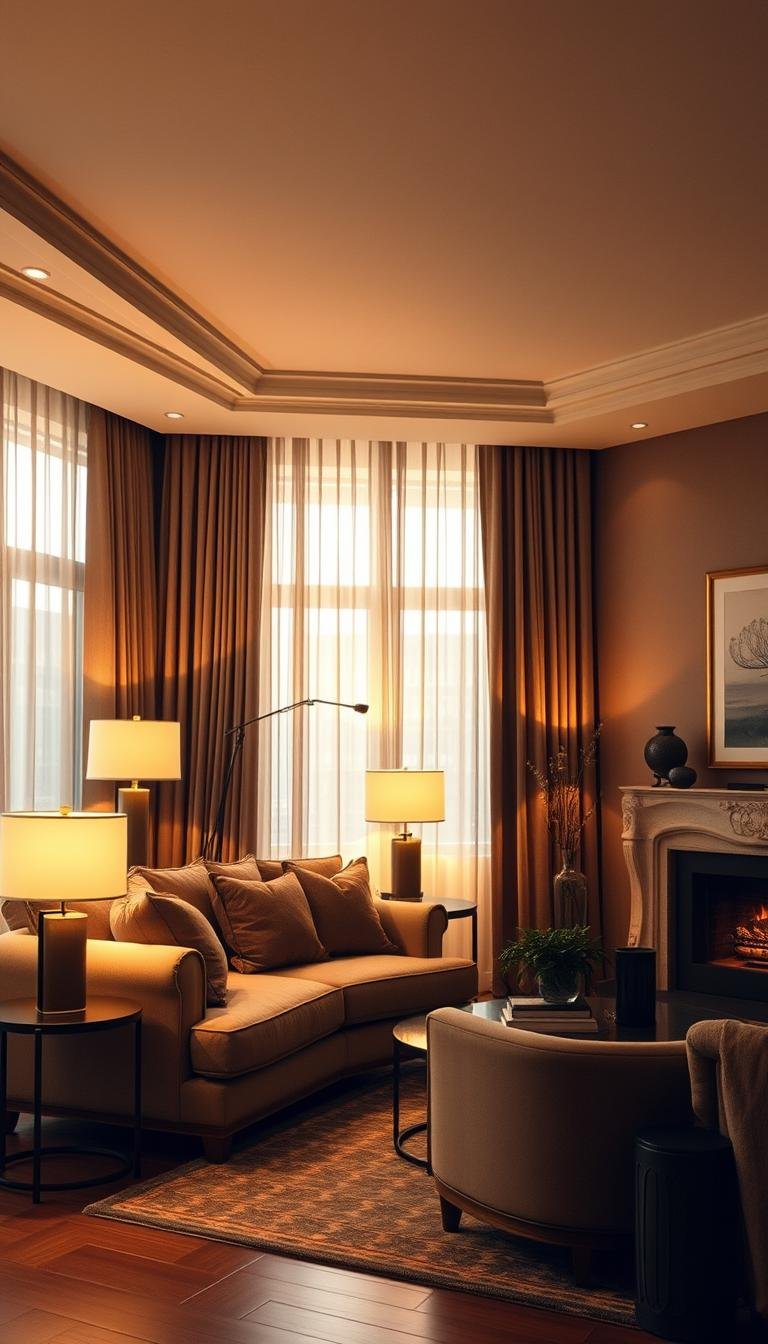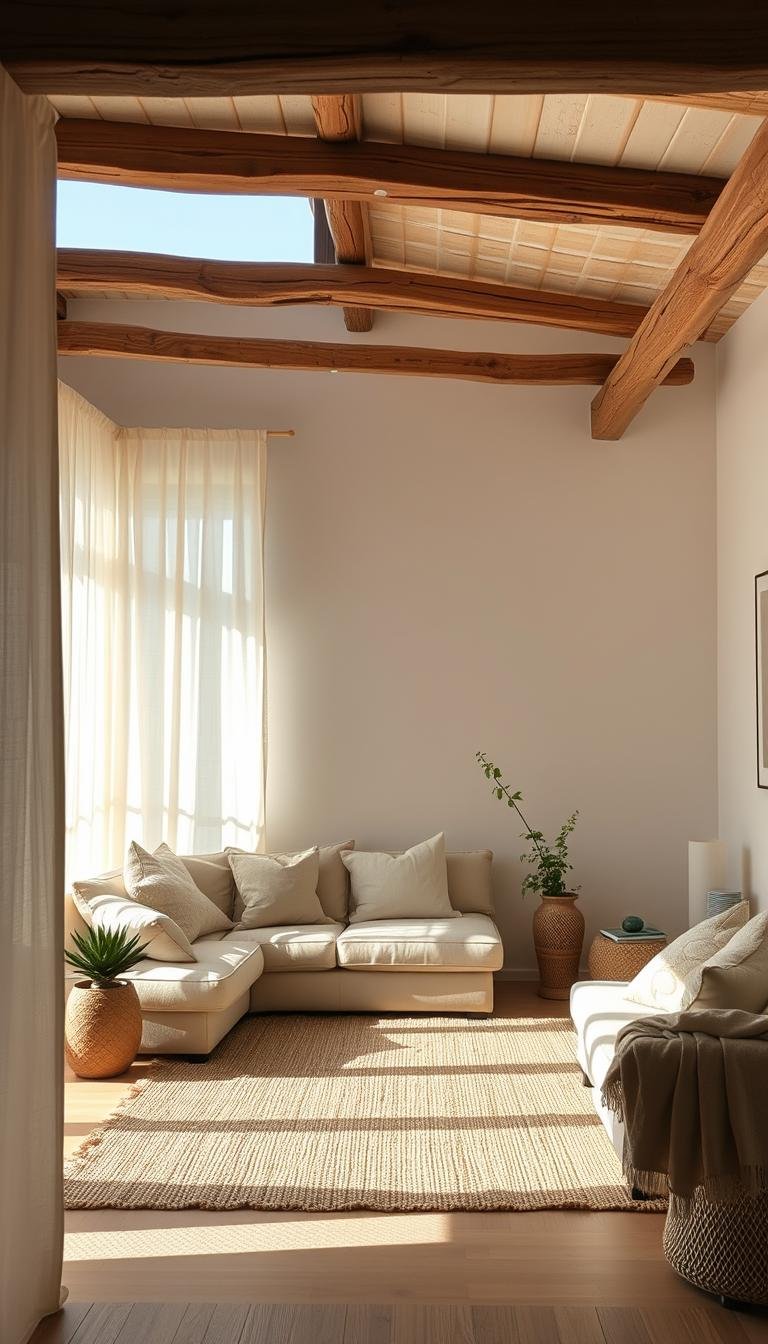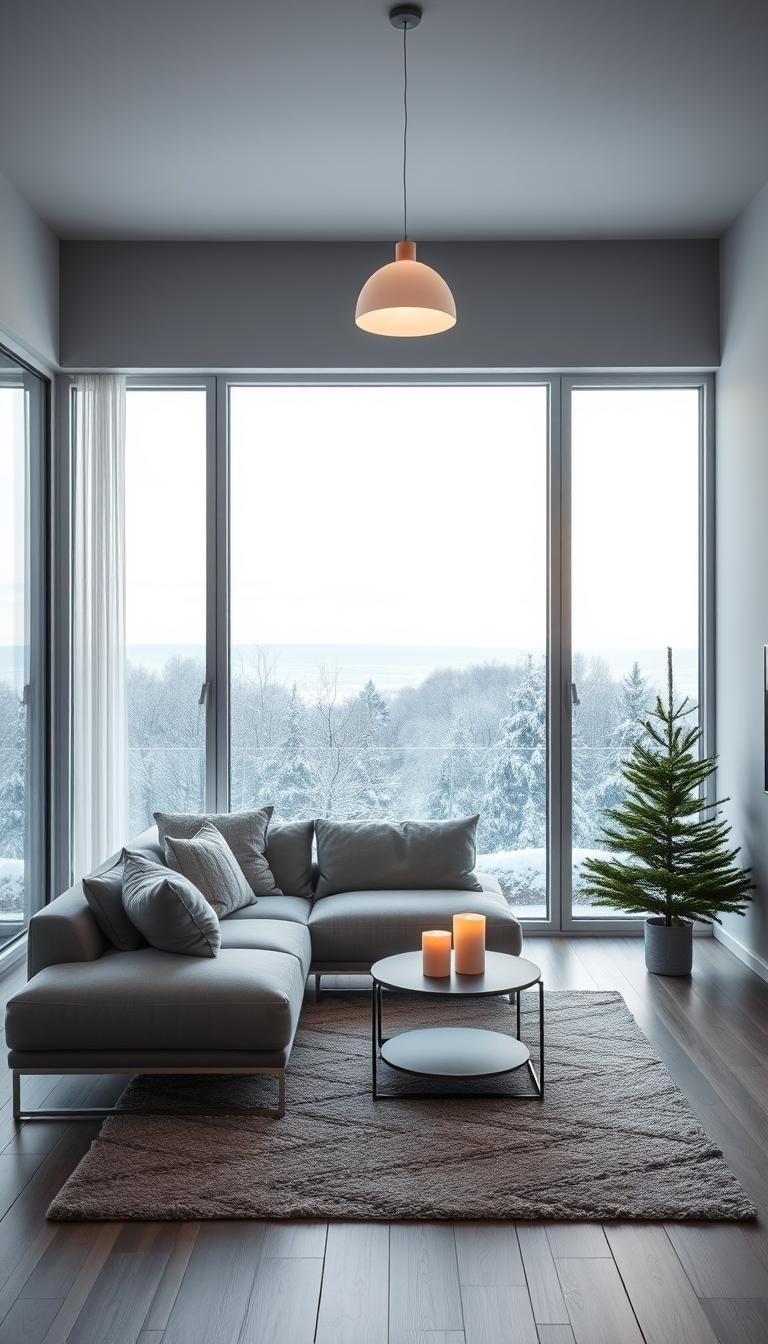
As we look at 2026 interior design trends, Japandi shines. It's a mix of Japanese and Scandinavian styles. This blend changes how we see our living spaces.
Japandi brings Scandinavian minimalism and Japanese elegance together. It makes a calm and stylish place. It's great for those who want a peaceful home.
We're going to dive into Japandi's key parts. You'll get tips on adding Japandi to your home. It focuses on natural materials, soft colors, and careful decor. Japandi is set to be a big trend in 2026.
Key Takeaways
- Understand the core elements of Japandi style
- Learn how to incorporate Japandi into your living space
- Discover the latest 2026 interior trends
- Get practical tips for creating a serene atmosphere
- Explore the fusion of Japanese and Scandinavian design
What Is Japandi Style? The Perfect Fusion of East and West
Japandi style is changing interior design by mixing Japanese elegance with Scandinavian minimalism. It's becoming popular for blending Scandinavian simplicity and Japanese elegance. This creates a unique look.
The Origins of Japanese and Scandinavian Design Harmony
The Japandi style comes from the cultural exchange between Japan and Scandinavian countries. Both cultures love simplicity, natural materials, and few decorations. This makes a perfect blend.
Japanese design adds tranquility and a connection to nature. Scandinavian design brings functionality and coziness.
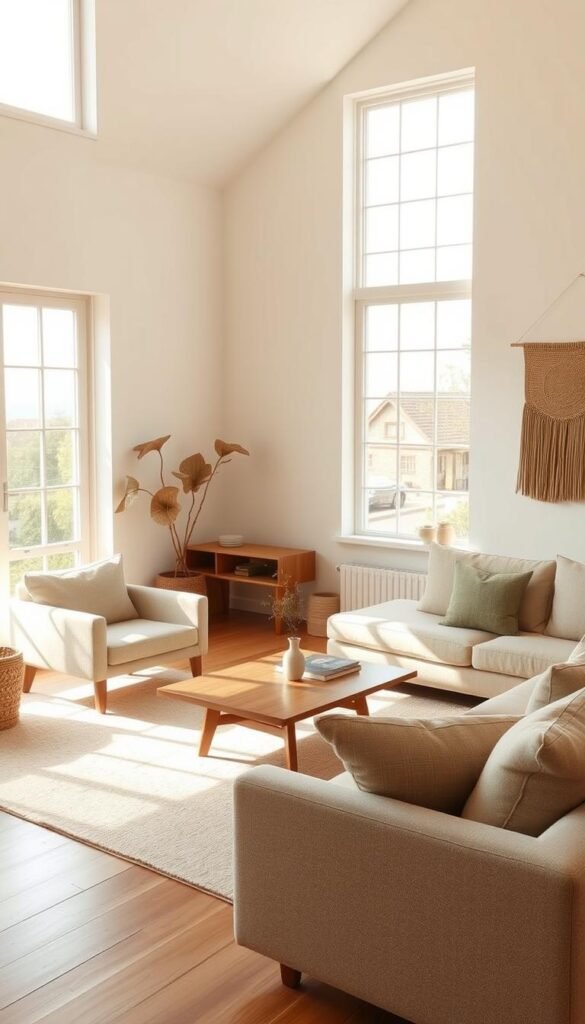
Core Principles: Minimalism, Functionality, and Natural Elements
The Japandi style is based on three main ideas: minimalism, functionality, and natural elements. These principles make Japandi interiors calm and serene. Minimalism uses clean lines and simple colors.
Functionality is key with furniture that does more than one thing. Natural elements like wood and plants add warmth and texture.
By mixing these elements, Japandi style makes a unique and appealing interior design. It's both calming and sophisticated. Let's see how you can bring this style to your living room for a peaceful retreat.
Why Japandi Living Room Design Is Dominating 2026 Interiors
In 2026, Japandi living room design is leading the way in interior trends. It blends Scandinavian minimalism with Japanese elegance. This style is winning over homeowners all over the world.
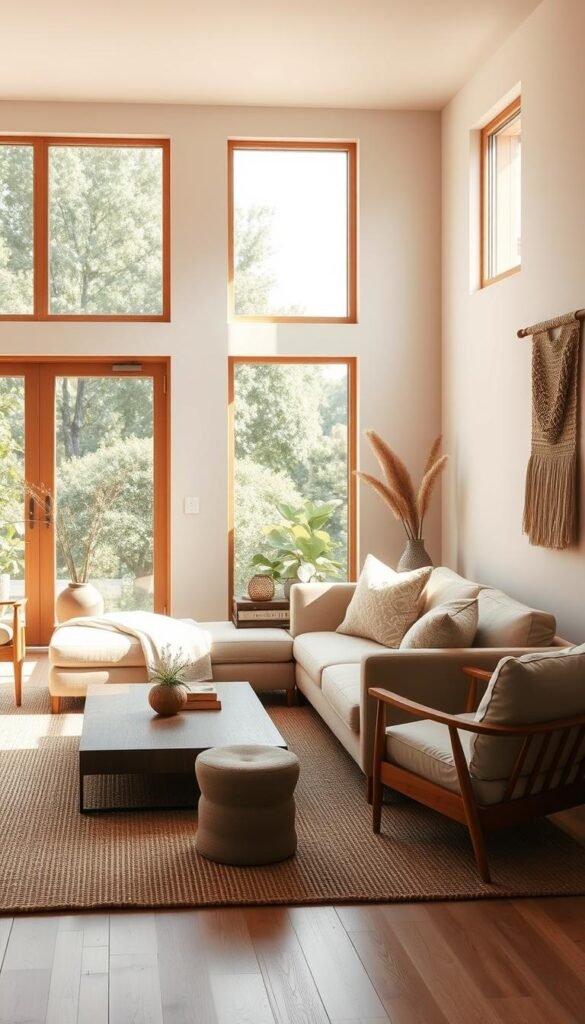
Post-Pandemic Shift Toward Calming, Intentional Spaces
The pandemic changed how we view our homes. Japandi living room design offers a peaceful space. It uses natural elements and focuses on function, creating spaces that support well-being.
Sustainability Focus Aligns with Contemporary Values
Japandi design is all about sustainability, matching today's values. It uses natural materials and aims for longevity. This eco-friendly approach is making Japandi more popular.
Celebrity Homes Showcasing the Trend
Celebrity homes often set design trends, and Japandi is no different. Celebrities are bringing this style into their homes. This exposure is making Japandi a key trend for 2026.
Essential Elements of a Japandi Living Room
Adding Japandi elements to your living room can make it peaceful and welcoming. To get this look, knowing the core elements of Japandi design is key.
Natural Materials and Organic Textures
Japandi design loves natural materials like wood, bamboo, and rattan. These add warmth and texture, making the room cozy. Using organic textures in furniture and decor makes the room feel natural.
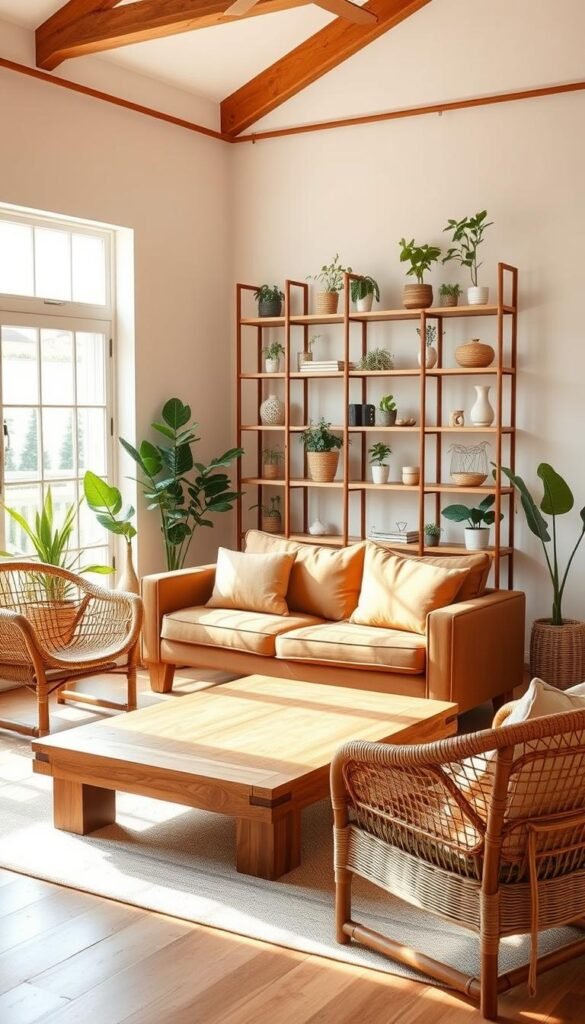
Neutral Color Palette with Subtle Contrasts
A neutral color palette is central to Japandi design. The room often features white, beige, and gray. Subtle contrasts come from different textures and materials. This mix creates a calm and harmonious space.
Clean Lines and Thoughtful Simplicity
Clean lines and thoughtful simplicity are Japandi's core principles. Furniture and decor should be simple, without too much clutter or decoration. This lets the natural materials stand out.
Balance Between Comfort and Minimalism
Finding a balance between comfort and minimalism is key in Japandi design. The space should be clean, but also have comfy seating and soft textiles. This makes the room welcoming.
| Element | Description | Example |
|---|---|---|
| Natural Materials | Use of wood, bamboo, and rattan | Wooden coffee table, rattan chair |
| Neutral Color Palette | Shades of white, beige, and gray | White walls, beige sofa |
| Clean Lines | Minimalist furniture and decor | Simple wooden bench, minimalist vase |
By using these key elements, you can make a Japandi living room that's both calm and inviting. The goal is to find a balance between simplicity and comfort. Use natural materials and a neutral color palette to create a space that feels harmonious.
Furniture Selection for the Perfect Japandi Space
To make a Japandi living room perfect, pick furniture that mixes Japanese and Scandinavian designs. The right furniture makes your space look good, feel comfy, and work well.
Low-Profile Seating Options
Low-profile seating is key in Japandi design. It brings calm and openness to your living room. Think about low-slung sofas or floor cushions in natural materials like linen or cotton. These pieces look simple and make your space feel relaxed.
Wooden Accent Pieces with Clean Lines
Wooden pieces with clean lines are important in Japandi furniture. Choose solid wood items like oak or walnut with simple designs. They add warmth and keep your room looking minimalist.
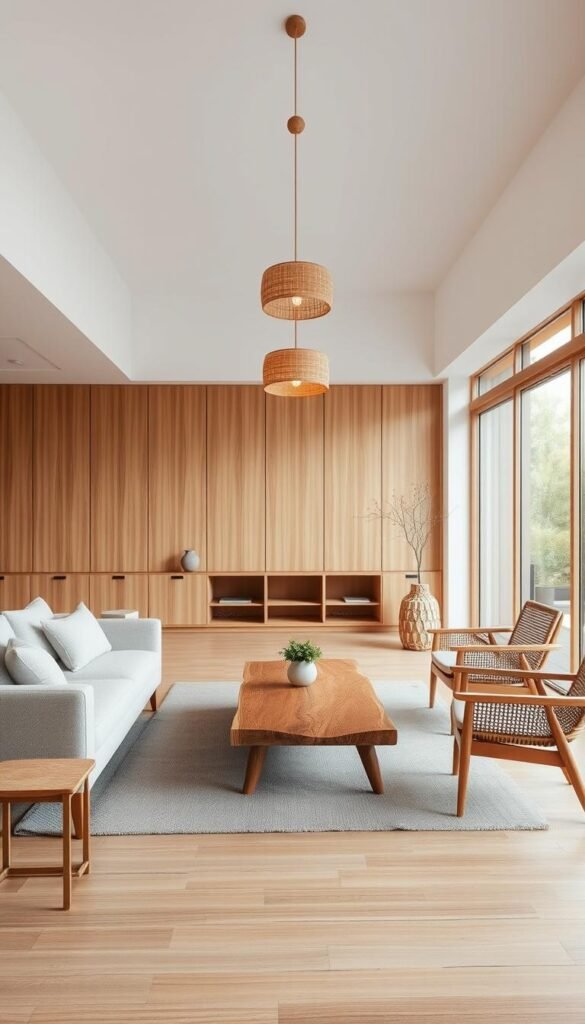
Multifunctional Furniture Solutions for 2026
In 2026, multifunctional furniture is big in Japandi design. Items like storage ottomans or nested tables are useful and keep your space tidy. Pick furniture that looks good and works well.
Statement Chairs That Blend Both Styles
Statement chairs can make your Japandi living room special. Look for chairs with clean lines, simple covers, and natural frames. They become a room highlight, adding interest and depth.
Using these furniture tips, you can make a Japandi living room that's both stunning and practical. It will show off the best of Japanese and Scandinavian styles.
Color Schemes That Define the 2026 Japandi Trend
The 2026 Japandi trend focuses a lot on color schemes. It combines earthy tones, subtle contrasts, and muted colors. This mix creates a calm atmosphere in your living room.
Earthy Neutrals as Foundation Colors
Beige, taupe, and soft gray are key in the Japandi color palette. These neutral tones set a peaceful background. They let you add color with accessories.
Strategic Use of Black Accents
Black accents add depth and contrast in Japandi design. Black frames around mirrors or artwork, or black hardware on furniture, stand out against the neutral background.
Incorporating Muted Blues and Greens
Muted blues and greens bring nature and calm to the Japandi color scheme. These soft hues can be used in throw pillows, blankets, or furniture. They add a touch of serenity.
The New Japandi Palette: Subtle Terracotta and Clay
The 2026 Japandi trend introduces terracotta and clay tones. These earthy hues add warmth and coziness. They can be used in ceramics, planters, or accent walls, making your living room feel welcoming.
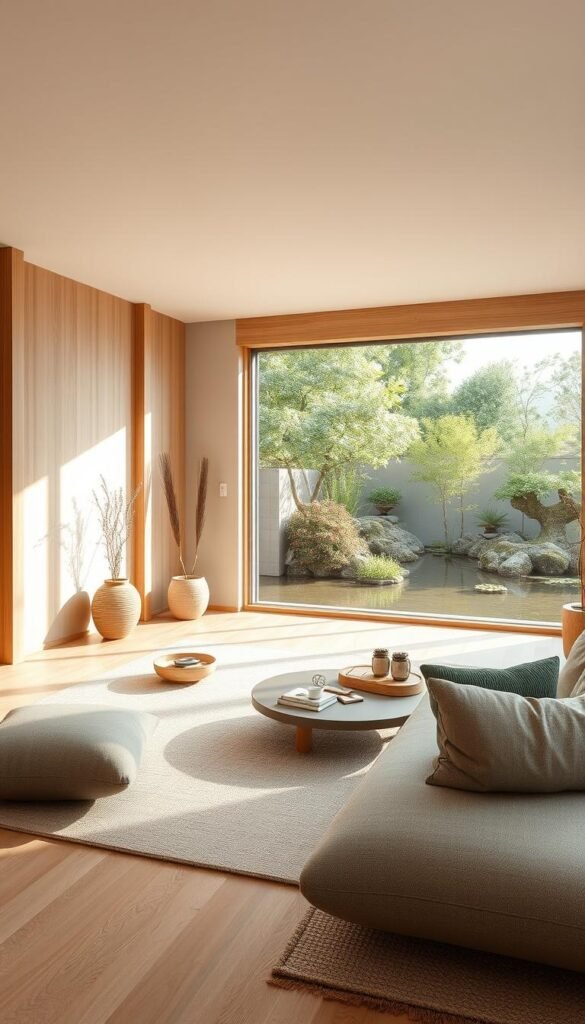
Lighting Choices for Your Japandi Living Room
Creating a Japandi living room means choosing the right lighting. It's key to blend simplicity with warmth. Good lighting can change a room's feel, making it cozy and inviting.
Paper Lanterns and Sculptural Pendant Lights
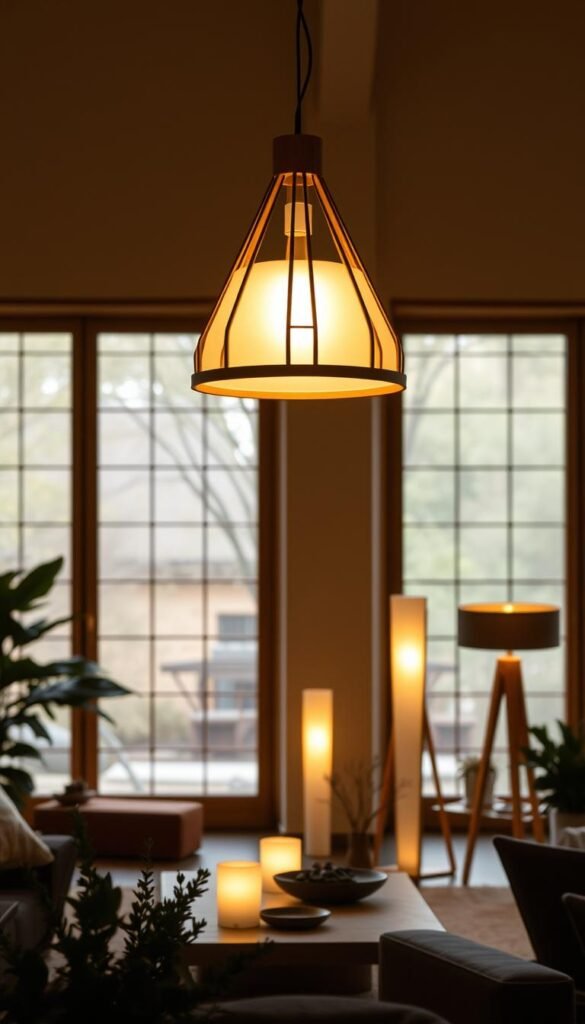
Paper lanterns and sculptural pendant lights are great for a Japandi look. They light up the room and add beauty. Pick paper lanterns in soft colors for a subtle splash of color.
Natural Light Maximization Techniques
Bringing in natural light is vital in Japandi design. Use sheer curtains or blinds to let sunlight in while keeping privacy. Also, mirrors near windows can bounce light, making the room brighter and more open.
Warm, Ambient Lighting Solutions
Warm, cozy lighting is essential for a Japandi room. Table or floor lamps with linen shades add warmth and texture. LED candles or fairy lights create a soft glow, perfect for a relaxing space.
2026's Trending Japandi Light Fixtures
In 2026, Japandi lighting will focus on function and simplicity. Look for lights made from wood or rattan and simple shapes. Trends include pendant lights with woven shades and minimalist chandeliers with a natural look.
Textile and Soft Furnishing Ideas
Textiles and soft furnishings are key in Japandi living rooms. They add warmth and texture. Choosing the right textiles is important for a cozy, minimalist look.
Natural Fiber Choices: Linen, Cotton, and Hemp
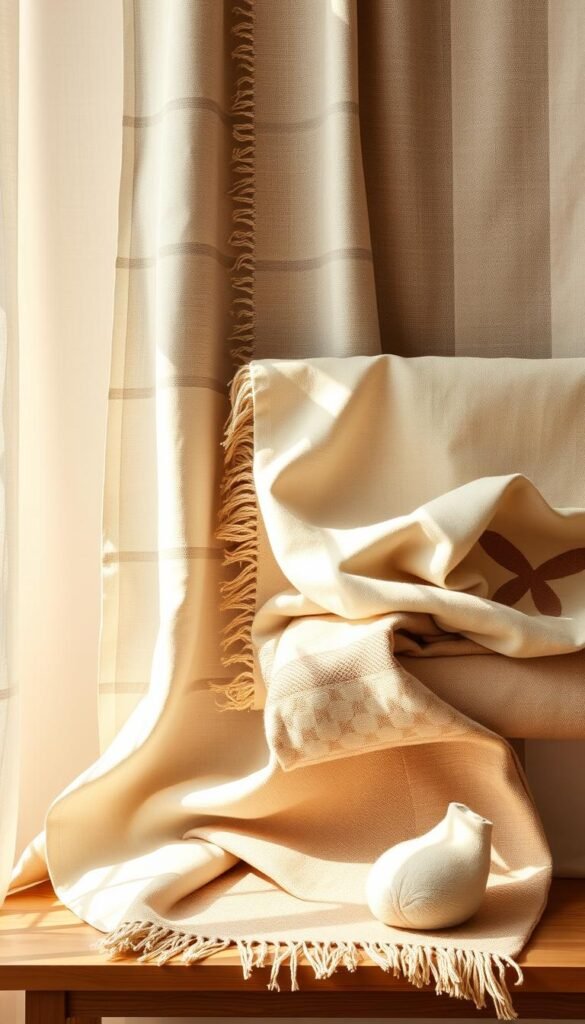
Natural fibers are central to Japandi textiles. Linen, cotton, and hemp are chosen for their simplicity and natural beauty. They bring an organic feel, fitting well with Japandi's love for nature.
Textural Contrast Through Layering
Layering different textures is a key part of Japandi design. Mixing smooth linen with chunky weaves or soft cotton with hemp creates a cozy, interesting space.
Minimalist Patterns and Designs
Japandi style loves minimalist patterns and simple designs. Simple geometric patterns or subtle designs add interest without overwhelming the space.
Handcrafted Textile Elements
Adding handcrafted elements gives your Japandi living room a unique touch. Think about handwoven baskets, embroidered linens, or other artisanal pieces. They show the craftsmanship valued in Japandi design.
| Fiber Type | Characteristics | Uses in Japandi Design |
|---|---|---|
| Linen | Lightweight, breathable, natural texture | Upholstery, curtains, throw blankets |
| Cotton | Soft, versatile, easy to dye | Cushion covers, rugs, wall hangings |
| Hemp | Durable, eco-friendly, textured | Rugs, wall hangings, decorative accents |
Bringing Nature Indoors: Plants in Japandi Design
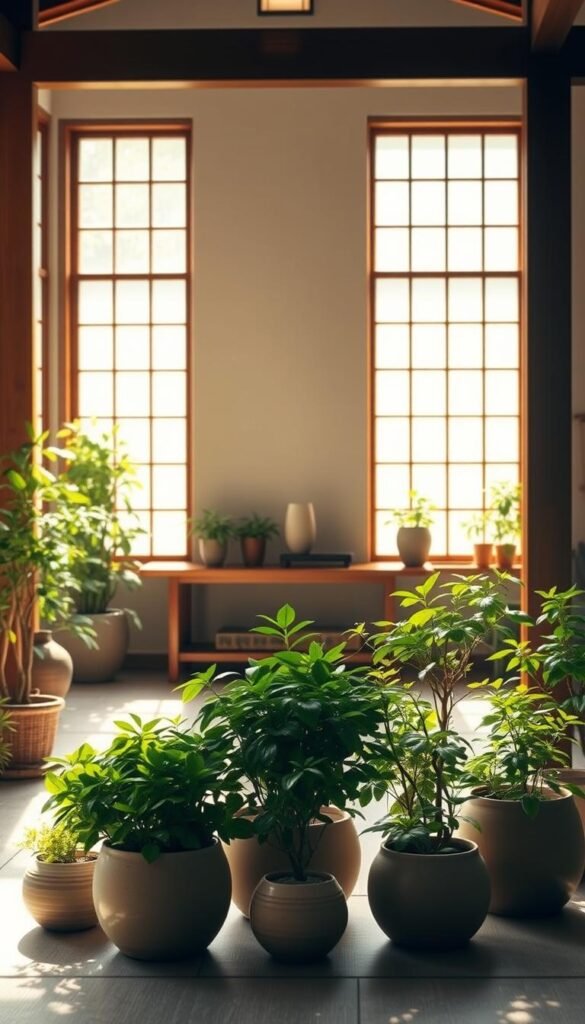
Plants are key in Japandi interiors, adding organic elegance. They help create a calming atmosphere, capturing the essence of Japandi design.
Statement Plants for Visual Impact
For a bold look in your Japandi living room, choose big, sculptural plants. The Fiddle Leaf Fig or Monstera Deliciosa are great. They add interest and drama.
Bonsai and Japanese-Inspired Greenery
Bonsai trees are a Japanese design staple. They add sophistication to your Japandi space. Try Juniper or Ficus for their beauty and meaning.
Scandinavian-Style Plant Displays
Use Scandinavian-style plant displays in your Japandi design. Simple, minimalist planters highlight your greenery, focusing on the plants.
Sustainable Plant Choices for 2026
For a green choice, pick plants that are local or have low environmental impact. Succulents and air plants are stylish and eco-friendly.
| Plant Type | Benefits | Care Level |
|---|---|---|
| Fiddle Leaf Fig | Visual impact, air purification | Moderate |
| Bonsai Trees | Aesthetic appeal, symbolic significance | High |
| Succulents | Low maintenance, eco-friendly | Low |
Art and Decor Elements That Complete the Japandi Look
To get the Japandi look right, you need to add art and decor that's simple and natural. The right pieces can make your living room feel welcoming and balanced.
Minimalist Wall Art Selections
Japandi style loves simplicity in wall art. Choose pieces that are both simple and striking. Think about black and white photography or abstract art with clean lines.
Ceramic and Pottery Accents
Ceramic and pottery add warmth and texture to your Japandi room. Look for handmade items with natural glazes and earthy colors. They bring a personal touch to your space.
Thoughtful Object Placement and Negative Space
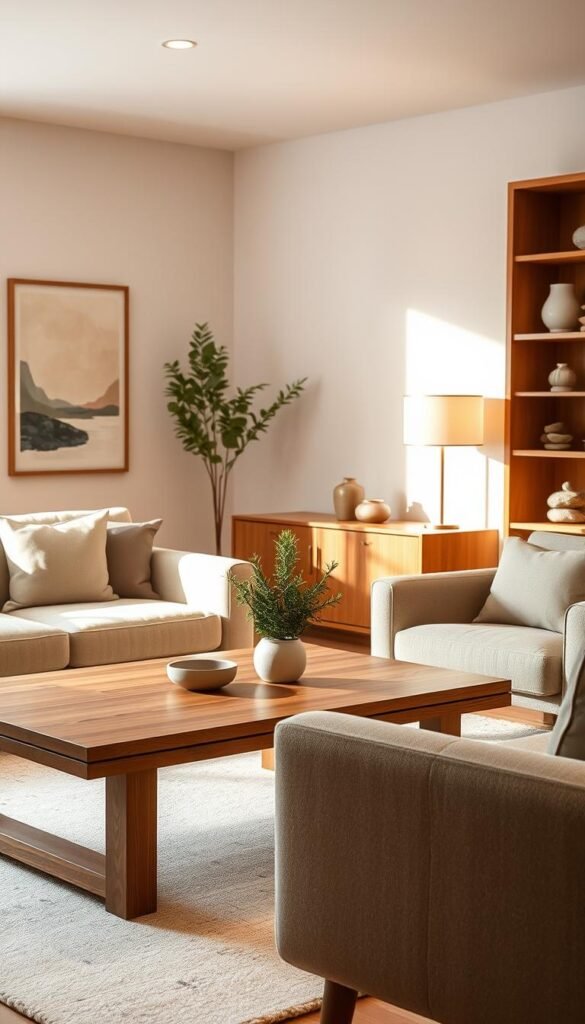
Choosing where to put your decor is key in Japandi design. Use negative space to keep things calm. Pick a few standout pieces and place them thoughtfully to keep the room peaceful.
Handcrafted Decorative Items
Handcrafted items are great for Japandi style. They make your space unique and interesting. Look for items made from natural materials like wood, clay, or woven fibers.
| Decor Element | Japandi Style Characteristics |
|---|---|
| Wall Art | Minimalist, black and white, abstract |
| Ceramic/Pottery | Handmade, natural glazes, earthy tones |
| Object Placement | Thoughtful, sparse, negative space |
| Handcrafted Items | Natural materials, unique, characterful |
DIY Japandi Projects to Transform Your Living Room
Make your living space serene with these easy DIY Japandi projects. They mix Japanese and Scandinavian design for a calm, inviting home. Use natural materials, clean lines, and minimal decor for a peaceful vibe.
Simple Wooden Accent Pieces You Can Make
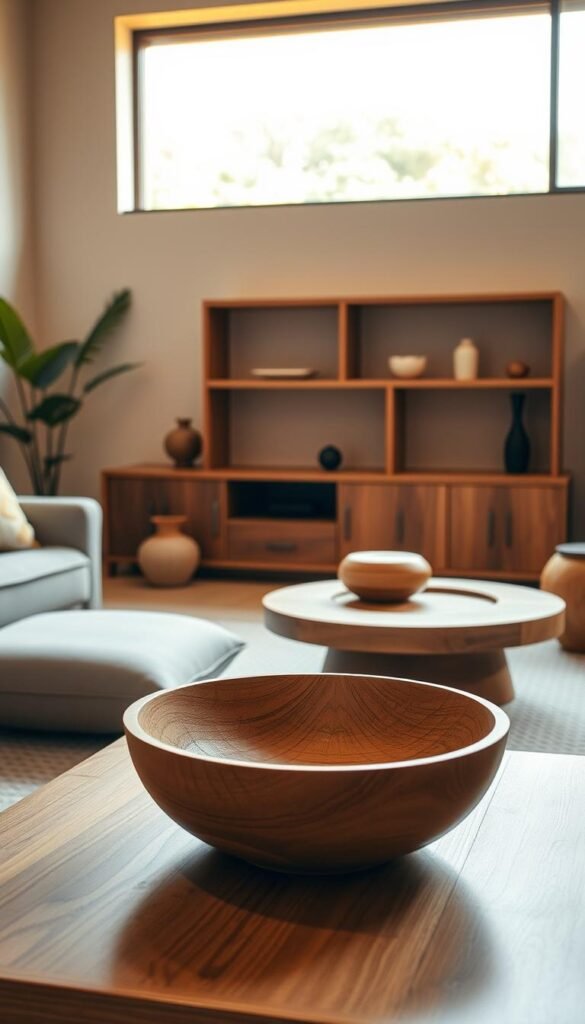
Begin with wooden accent pieces like a wall shelf or coffee table. These add warmth and character to your Japandi room. Choose reclaimed or sustainably sourced wood for an eco-friendly touch.
Natural Fiber Wall Hangings
Make a natural fiber wall hanging with linen, cotton, or hemp. These textures add depth and organic elegance. You can weave or knot them into patterns that fit Japandi's minimalist style.
Upcycled Furniture with Japandi Aesthetics
Give old furniture a new life with Japandi design. Paint or refinish a chair with a natural finish, or swap the upholstery for natural fabrics. This reduces waste and adds a personal touch to your room.
| Project | Materials Needed | Skill Level |
|---|---|---|
| Wooden Wall Shelf | Reclaimed wood, brackets | Intermediate |
| Natural Fiber Wall Hanging | Linen, cotton, or hemp | Beginner |
| Upcycled Furniture | Old furniture, paint or natural finish | Intermediate |
Weekend Projects for Instant Japandi Appeal
These DIY projects are perfect for a weekend. They give your living room a quick Japandi makeover. By combining these elements, you'll have a space that's both harmonious and inviting.
Conclusion: Embracing Japandi Living Room Style in Your Home
In 2026, Japandi living room design is becoming more popular. It offers a calm and stylish option for homes. Japandi style mixes Japanese and Scandinavian designs, creating a space that is simple, functional, and natural.
To add Japandi style to your home, use natural materials and neutral colors. Choose furniture that is both beautiful and practical. Add plants, simple art, and handmade items to finish the look.
Embracing Japandi style means you'll be in line with 2026's interior trends. You'll also create a peaceful and thoughtful space that shows off your personal taste. Let's make our homes more serene and harmonious with Japandi design.
FAQ
What is Japandi style, and how can I incorporate it into my living room?
Japandi style blends Japanese and Scandinavian design. It's all about minimalism, natural materials, and calm colors. To bring Japandi into your living room, start with natural materials like wood and linen. Choose a neutral color scheme with soft contrasts.
What are the key elements of Japandi furniture?
Japandi furniture has clean lines and focuses on function. Look for pieces made from wood and leather. Choose low-profile seating and furniture that does more than one thing.
How can I choose the right color scheme for my Japandi living room?
Japandi colors are earthy and neutral, like beige and gray. Add muted blues and greens for contrast. Use natural textures to add depth and interest.
What type of lighting is suitable for a Japandi living room?
Japandi lighting uses natural materials like paper lanterns and wooden lights. It's all about warm, ambient light. Use table and floor lamps with simple designs to enhance the space.
Can I mix Japandi with other design styles?
Japandi can blend with other styles for a unique look. Mix it with minimalist or natural styles like bohemian or coastal. This creates a welcoming and harmonious space.
How can I add plants to my Japandi living room?
Adding plants brings nature indoors and adds interest. Use statement plants, bonsai, or Japanese greenery. Display them in simple planters or Scandinavian-style displays.
What are some DIY Japandi projects I can try?
DIY Japandi projects are fun and creative. Try making wooden accents, natural fiber wall hangings, or upcycled furniture. This adds a personal touch to your space.
How can I balance comfort and minimalism in my Japandi living room?
Balancing comfort and minimalism is key. Use natural materials like linen and wool for texture and warmth. Keep the look minimalist with simple lines and limited decor.