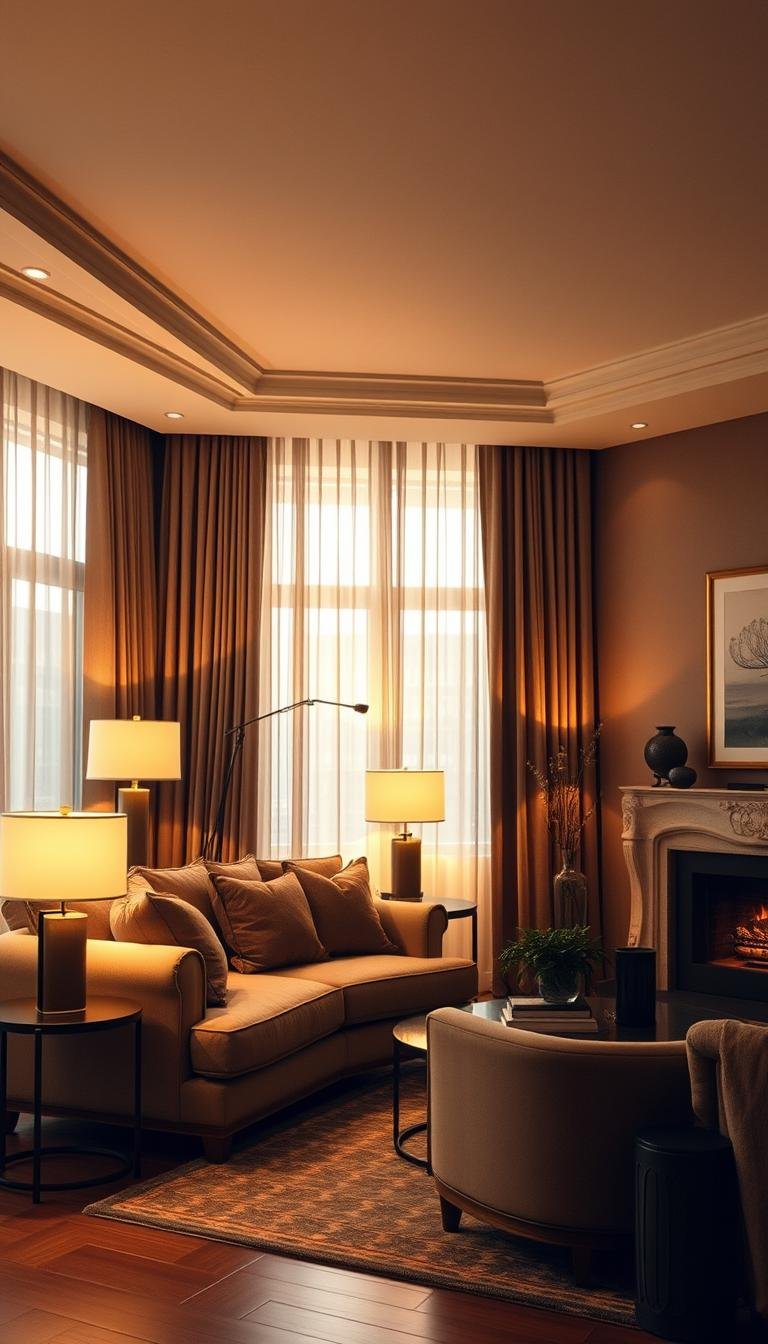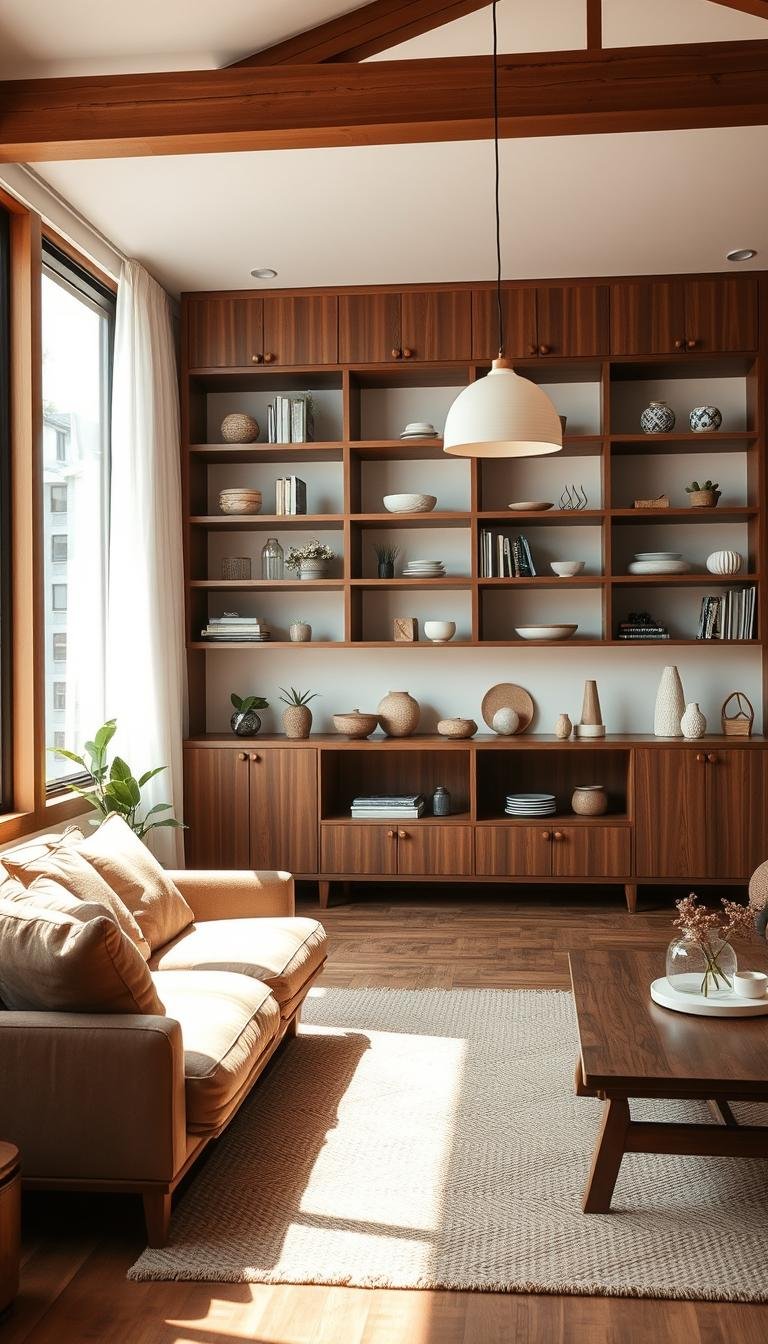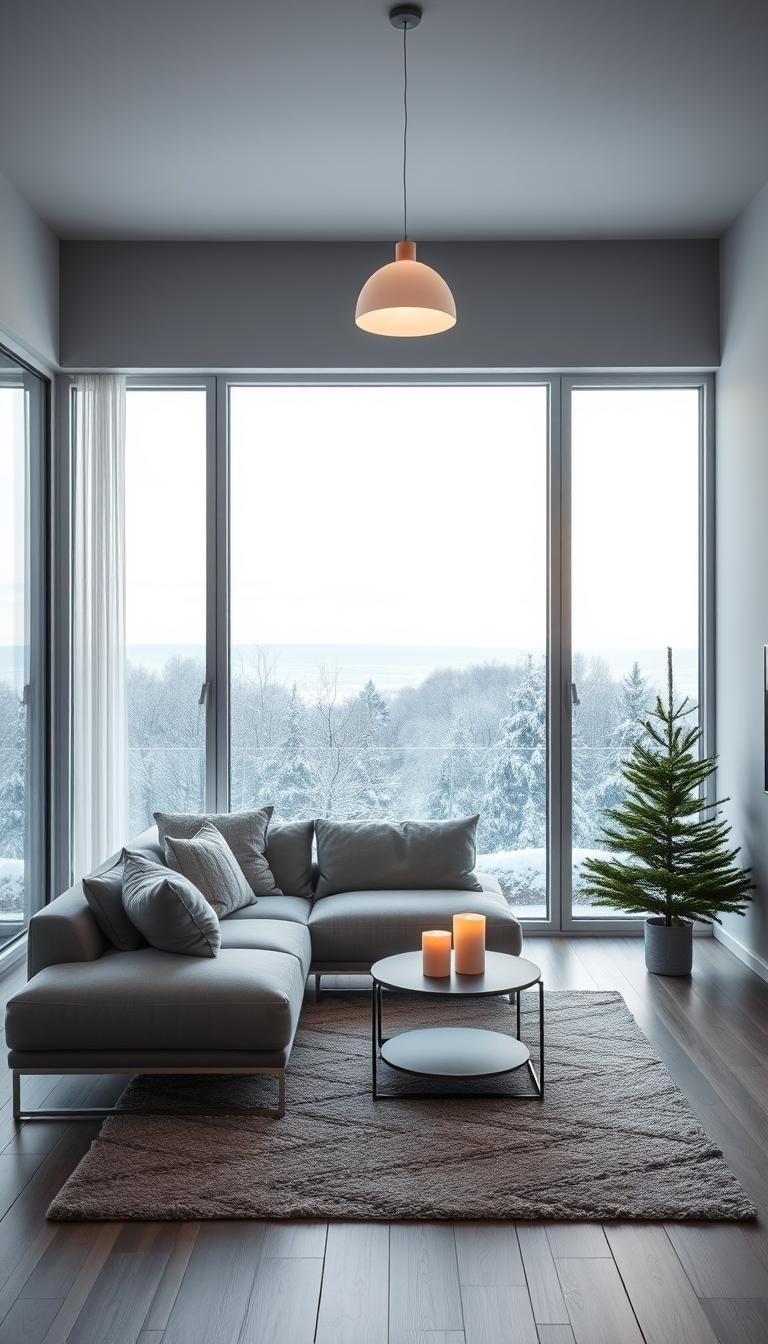
Let's dive into the calm world of Wabi Sabi living rooms. Here, beauty meets imperfection and nature's peace. It's a peaceful haven.
We're here to share design ideas and tips for a mindful living space. By following Wabi Sabi design, your home will be calming and real.
In this article, we'll guide you to add Wabi Sabi's simplicity and elegance to your home. You'll create a peaceful space that cares for your body and soul.
Key Takeaways
- Embracing imperfection in home design
- Incorporating natural elements for tranquility
- Practical tips for achieving a Wabi Sabi aesthetic
- Creating a peaceful atmosphere through mindful living
- Simplifying your space for a more authentic feel
The Philosophy Behind Wabi Sabi Design
Wabi Sabi design is more than looks; it's a way of life. It celebrates the beauty of things that are imperfect. This ancient Japanese idea has grown into a modern movement. It teaches us to slow down and enjoy the simple, imperfect things around us.
Ancient Japanese Roots and Modern Relevance
Wabi Sabi started in traditional Japanese aesthetics. It was prized for its simplicity and humility. Now, it inspires a mindful way of living. It helps us see beauty in the everyday and the imperfect.
Embracing Imperfection and Transience
Wabi Sabi is all about accepting impermanence and imperfection. It teaches us to:
- Love the unique charm of handmade or weathered items
- See beauty in the passing of time
- Be thankful for the present moment
The Connection Between Wabi Sabi and Mindfulness
Wabi Sabi and mindfulness go hand in hand. By following Wabi Sabi, we become more aware of our surroundings. We learn to appreciate the simple things. This mindful design approach can make our living spaces more peaceful and serene.
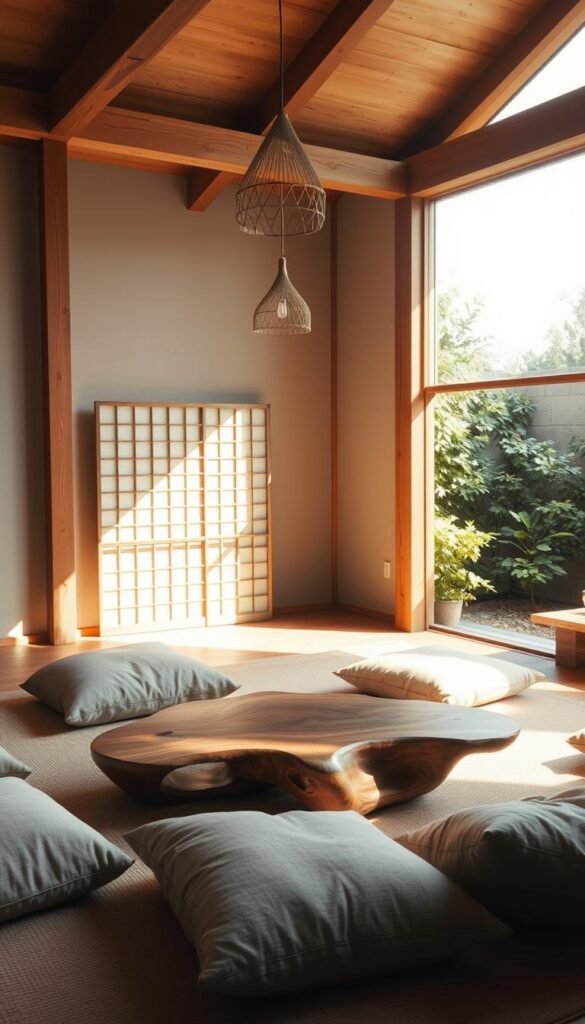
Essential Elements of a Wabi Sabi Living Room
A peaceful Wabi Sabi living room uses natural materials, organic textures, and asymmetrical shapes. This creates a calm, inviting space that connects us to nature.
Natural Materials and Organic Textures
Wabi Sabi design loves natural materials and textures. We can add reclaimed wood, stone, and natural fibers for warmth and authenticity. As Andrew Juniper said, "Wabi Sabi is about the beauty of things imperfect, impermanent, and incomplete."
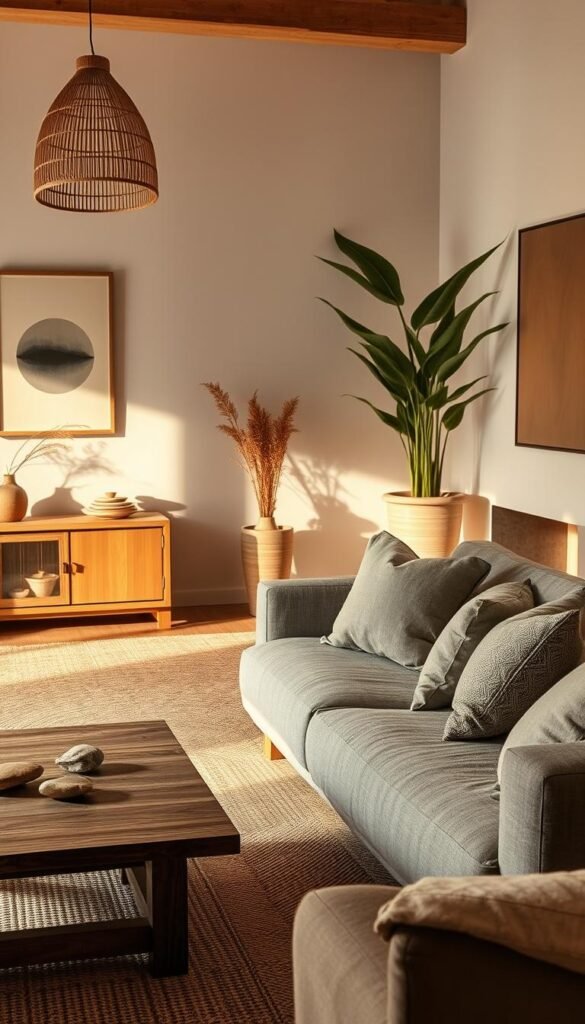
Asymmetry and Irregular Forms
Asymmetry and irregular forms are key in Wabi Sabi design. They make our space feel organic and less structured. We can use handcrafted furniture and unique decorative objects to achieve this.
"The imperfect is often more interesting than the perfect."
This view helps us see the beauty in imperfection.
Simplicity and Authenticity in Design
Simplicity and authenticity are central to Wabi Sabi design. We focus on the essentials and the beauty of materials. This creates a calm, serene space that connects us to nature. Remember, "less is more" in Wabi Sabi design.
Creating a Peaceful Color Palette
Starting a serene living room begins with a thoughtful color palette. This palette should reflect the Wabi Sabi spirit. A well-chosen color palette is key to a peaceful and welcoming space.

Earth Tones and Muted Neutrals
Wabi Sabi design loves earthy tones and muted neutrals. These colors bring calm and connect us to nature. Shades like beige, taupe, and moss green add warmth and serenity to your room.
The Importance of Negative Space
Negative space is vital in Wabi Sabi design. It's the empty space that lets our eyes breathe and calm. This empty space helps our eyes rest and recharge.
Seasonal Color Transitions
Wabi Sabi design also values seasonal changes. Adjust your colors to match the season. Use lighter shades in spring and summer, and richer tones in autumn and winter.
| Season | Color Palette |
|---|---|
| Spring | Soft pastels, creamy whites |
| Summer | Light greens, sky blues |
| Autumn | Warm oranges, rich reds |
| Winter | Deep grays, muted browns |
Wabi Sabi Furniture Selection and Arrangement
To capture the essence of Wabi Sabi, we need to pick our furniture wisely. The right items should mirror the Wabi Sabi philosophy. They should also make our living space peaceful and harmonious.
Handcrafted and Artisanal Pieces
Wabi Sabi loves the beauty of imperfection and uniqueness. So, we seek handcrafted and artisanal furniture with a story. Each piece should show the human touch and the natural materials used.
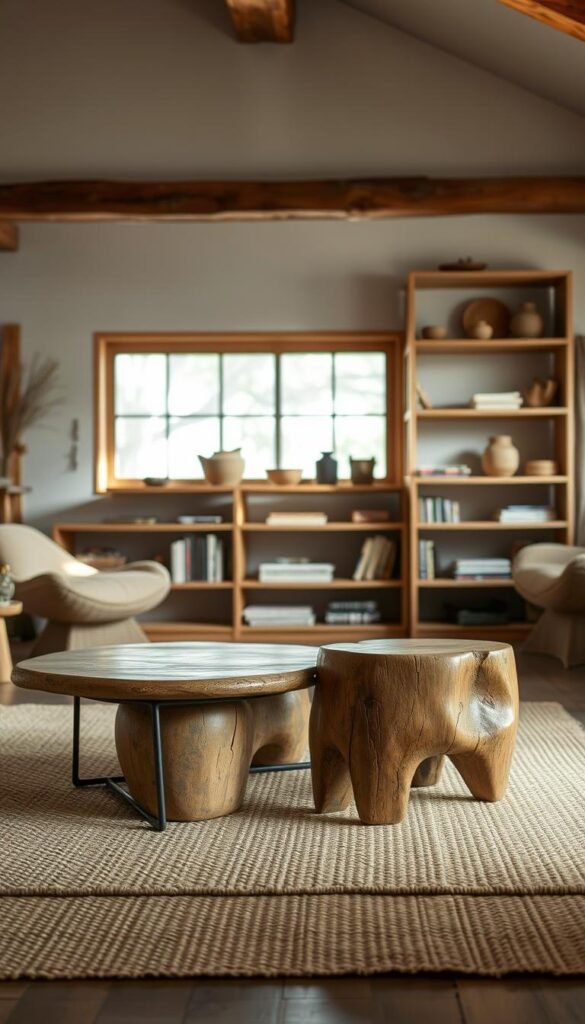
Weathered Wood and Aged Materials
Weathered wood and aged materials are key in Wabi Sabi furniture. They add history and authenticity to any room. The patina on aged wood, for example, shows time's passage, adding warmth and depth.
Intentional Furniture Placement for Flow
How we arrange furniture is as vital as the furniture itself. We aim for a layout that lets energy flow smoothly. This balance between empty space and furniture placement makes the room feel both open and cozy.
| Material | Characteristics | Wabi Sabi Appeal |
|---|---|---|
| Reclaimed Wood | Weathered, unique marks | High |
| Natural Stone | Earth tones, varied textures | High |
| Cotton | Soft, breathable, natural | Medium |
By choosing handcrafted items, using weathered materials, and arranging furniture with care, we can make a Wabi Sabi living room. It will be serene and deeply connected to this ancient Japanese philosophy.
Textiles and Soft Furnishings for Warmth and Texture
Textiles are key in making a Wabi Sabi space warm and inviting. They add depth and coziness. Natural fibers, hand-dyed patterns, and layered textures connect us to nature.
Natural Fibers: Linen, Cotton, and Hemp
Natural fibers like linen, cotton, and hemp are essential in Wabi Sabi design. They add an organic feel to the room. Linen is great for creating a calm atmosphere.
Hand-Dyed and Imperfect Textile Patterns
Hand-dyed and imperfect patterns bring authenticity to Wabi Sabi. These unique designs, made with traditional methods, show human touch. They align with the Wabi Sabi philosophy.
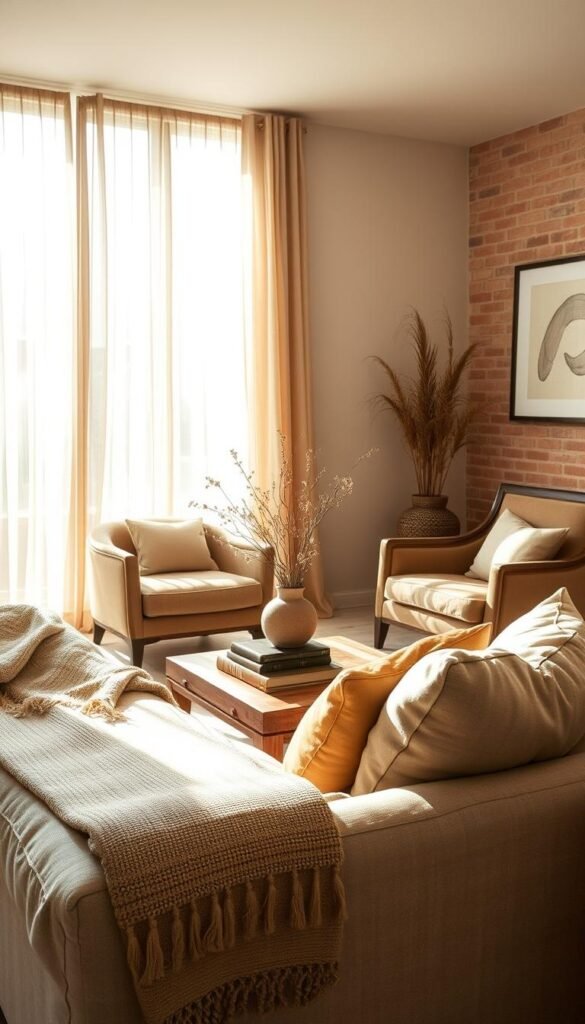
Layering Different Textures for Depth
Layering textures is vital in Wabi Sabi design. It adds depth and interest to the living room. Mixing smooth linens, chunky weaves, and soft throws creates a cozy space.
| Texture | Material | Effect |
|---|---|---|
| Smooth | Linen | Serene ambiance |
| Chunky | Wool | Cozy warmth |
| Soft | Cotton | Inviting comfort |
Lighting Design in Wabi Sabi Living Rooms
In Wabi Sabi living rooms, lighting is more than just light. It's about making a space that feels calm and connected to nature. Good lighting design makes the room look and feel better.
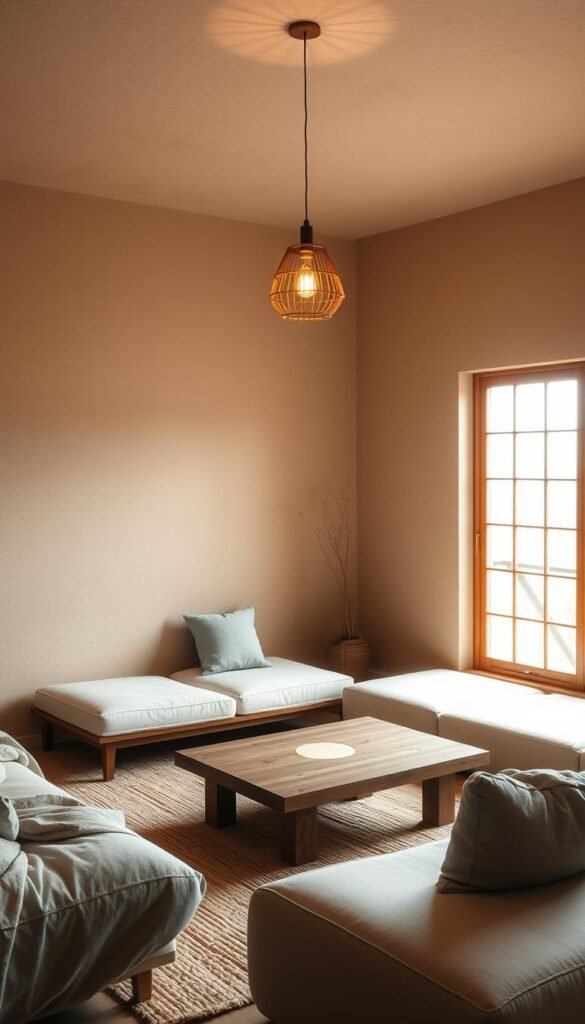
Harnessing Natural Light Sources
Maximizing natural light is a big part of Wabi Sabi lighting. Use sheer curtains or simple window treatments. They let sunlight in, lighting up the room and showing off its natural beauty.
Paper Lanterns, Ceramic Lamps, and Candles
Wabi Sabi rooms also use soft, warm artificial light. Paper lanterns, ceramic lamps, and candles are favorites. They make the room cozy and add organic textures and materials.
Creating Meaningful Shadows and Ambiance
Light and shadow play is key in Wabi Sabi lighting. By placing lights carefully, you can create interesting shadows. This adds depth and makes the room feel more welcoming.
Bringing Nature Into Your Wabi Sabi Living Room
Wabi Sabi living room design celebrates the natural world. It brings calm and connection to our homes. By adding natural elements, we make our space feel organic and peaceful.
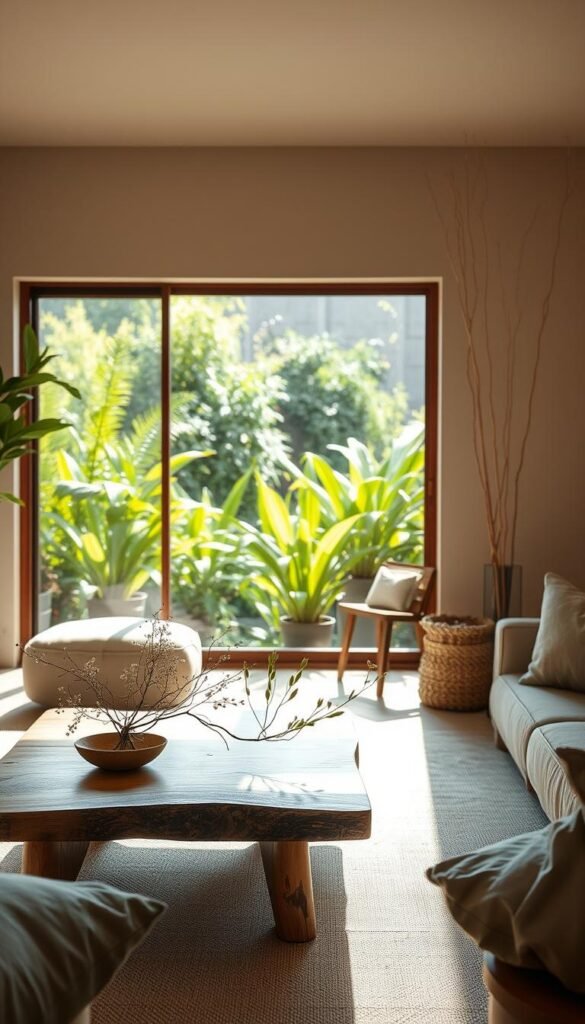
Indoor Plants and Seasonal Botanical Elements
Indoor plants are a great way to bring nature inside. Pick plants with different textures and shapes to add depth. Adding seasonal botanicals, like branches or flowers, keeps your decor fresh and connected to nature.
For instance, a vase with spring branches or a bowl of winter pinecones can bring the outdoors in. This adds a special touch to your Wabi Sabi living room.
Stone, Clay, and Driftwood Decorative Objects
Materials like stone, clay, and driftwood warm up your space. Look for items that show off their unique textures and imperfections.
A clay vase or a stone sculpture can be a room's centerpiece. Driftwood can be used to make a unique wall hanging or mobile.
Water Features and Natural Sounds
The sound of water enhances a Wabi Sabi living room's calm vibe. A small water feature, like a tabletop fountain, creates a soothing background sound.
Playing natural sounds, like rain or ocean waves, in the background also adds to the tranquility. It makes your space feel more connected to nature.
Wall Treatments and Mindful Décor Choices
In Wabi Sabi design, walls are more than just a backdrop. They are a canvas for showing the beauty of imperfection. The right wall treatments and décor choices can make a Wabi Sabi living room serene and calming.
Textured Plaster, Clay, and Natural Finishes
Using textured plaster or clay finishes on walls adds depth and tactility. These natural materials warm and add character, embodying the Wabi Sabi spirit. The imperfections in these finishes tell a story, making the space feel authentic and lived-in.
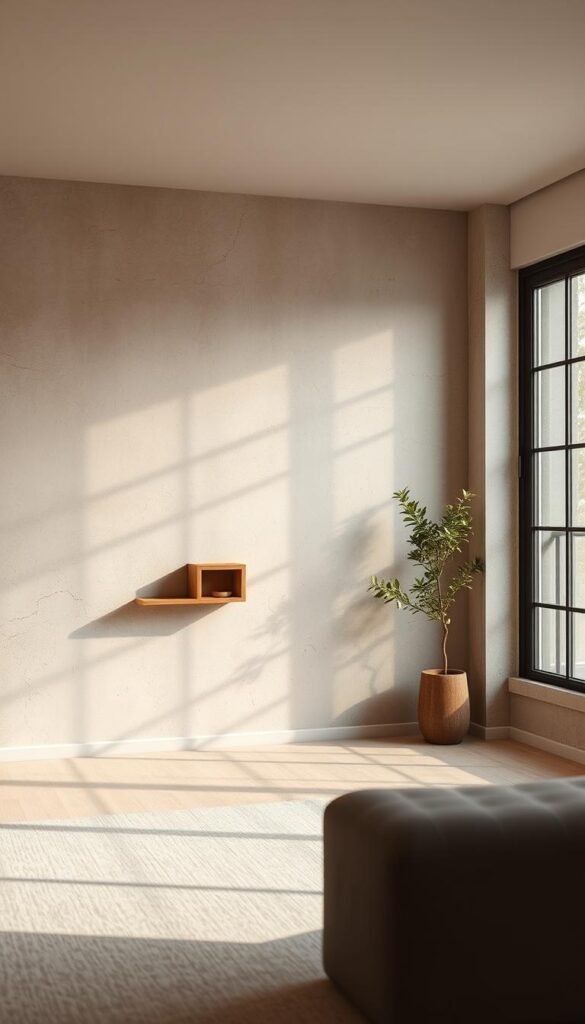
Minimalist Art and Ikebana Arrangements
Incorporating minimalist art or Ikebana arrangements on walls brings calm and mindfulness. These elements should be simple yet meaningful. They reflect the Wabi Sabi appreciation for simplicity and nature's beauty.
Curating Meaningful Imperfect Collections
Wabi Sabi encourages curating collections that are personal and meaningful. Displaying imperfect, handmade, or vintage items on walls adds character and tells a story. It makes the space feel more personal and inviting.
10 Inspiring Wabi Sabi Living Room Examples
Exploring Wabi Sabi in your living room is a journey of discovery and peace. Let's look at 10 inspiring examples that show its beauty in different settings.
Urban Apartment Transformations
Urban apartments can greatly benefit from Wabi Sabi's focus on simplicity and natural materials. Using weathered wood and natural textiles can warm up a modern, minimalist space.
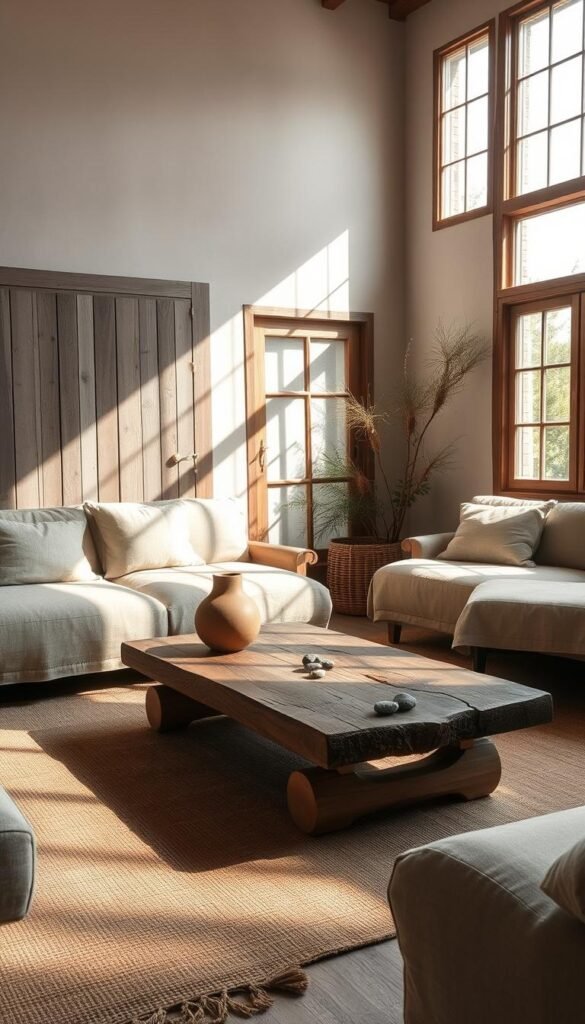
Rural and Rustic Wabi Sabi Spaces
Rural settings are perfect for Wabi Sabi design, with its love for natural surroundings and aged materials. A rustic Wabi Sabi living room might have stone walls, exposed beams, and furniture made from reclaimed wood.
Celebrity Homes Embracing the Wabi Sabi Aesthetic
Even celebrities are drawn to Wabi Sabi design's serene beauty. They've incorporated its principles into their homes, creating peaceful retreats that blend with nature.
Before and After Transformations
Seeing a Wabi Sabi transformation is truly inspiring. Let's look at a few before-and-after examples to show the power of this design philosophy.
| Feature | Before | After |
|---|---|---|
| Furniture | Modern, sleek pieces | Wabi Sabi-inspired, handmade items |
| Color Palette | Bright, bold colors | Muted, earthy tones |
| Decor | Ornate, cluttered | Simple, curated items |
These examples show how Wabi Sabi can turn a living room into a serene and welcoming space, no matter its original state.
Conclusion: Finding Serenity Through Wabi Sabi Living
Our journey into Wabi Sabi living rooms has ended, but the inspiration remains. We aim to make our homes peaceful, embracing imperfection and natural beauty. This approach to design helps us live more mindfully and connect with our surroundings.
Wabi Sabi living teaches us to value simplicity. It's about making our spaces authentic and meaningful. We can achieve this by using natural materials and choosing décor that promotes calm.
Let's apply Wabi Sabi design to our homes and lives. This way, we celebrate imperfection and the calm of nature. Our homes will become havens of peace, supporting our well-being and encouraging mindful living.
FAQ
What is Wabi Sabi, and how can it be applied to living room design?
Wabi Sabi is a Japanese design philosophy. It celebrates the beauty of imperfection and impermanence. To apply it to your living room, use natural materials and organic textures. Choose asymmetrical forms that show the beauty of imperfection.
How do I choose a color palette that embodies the Wabi Sabi spirit?
A Wabi Sabi color palette uses earthy tones and muted neutrals. These colors bring calmness and serenity. Use negative space and allow for seasonal color changes for a natural look.
What types of furniture are suitable for a Wabi Sabi living room?
Choose handcrafted and artisanal furniture for a Wabi Sabi living room. Furniture made from weathered wood adds character. Place furniture carefully to ensure a smooth flow of energy.
How can I incorporate natural elements into my Wabi Sabi living room?
Bringing nature indoors is key in Wabi Sabi design. Use indoor plants and seasonal botanical elements. Add natural decorative objects like stone and driftwood to connect your space to nature.
What role does lighting play in Wabi Sabi design, and how can I achieve a warm and inviting atmosphere?
Lighting is vital in Wabi Sabi design. Use natural light and paper lanterns, ceramic lamps, and candles. Create meaningful shadows for a warm and inviting atmosphere.
How can I add warmth and texture to my Wabi Sabi living room using textiles?
Textiles add warmth and texture to your Wabi Sabi living room. Use natural fibers like linen and cotton. Choose hand-dyed and imperfect patterns. Layering different textures adds depth and interest.
What are some tips for curating a mindful and beautiful Wabi Sabi living room?
For a mindful and beautiful Wabi Sabi living room, focus on simplicity and authenticity. Use textured plaster and natural finishes on walls. Add minimalist art and Ikebana arrangements for a calm and meaningful space.