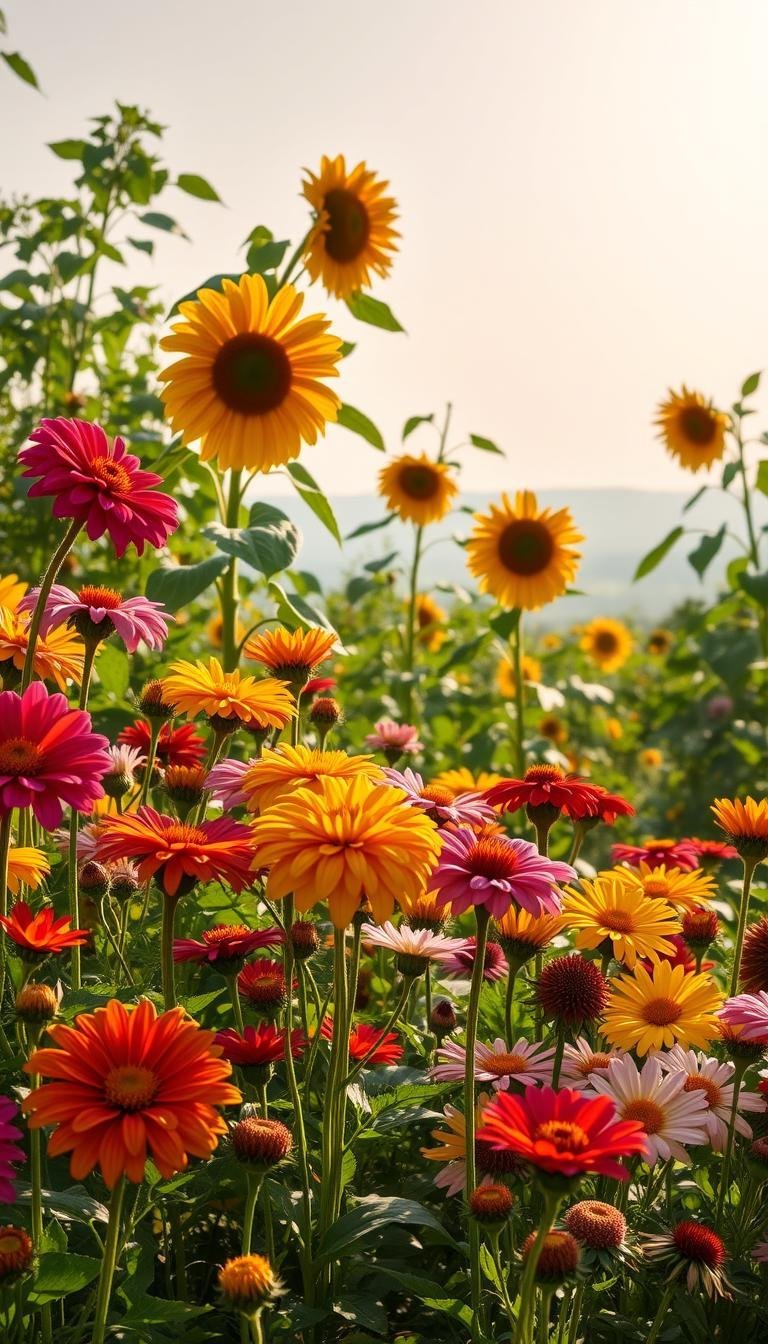
Summer flowers add life and color to gardens everywhere. They come in bold reds and soft pinks, making beautiful displays. These plants love the warm weather, making yards and public spaces beautiful across the U.S.
Whether you're a pro gardener or new to it, summer flowers are exciting. This article will help you pick, grow, and enjoy these blooms. You'll learn how to choose the best varieties, care for them, and use them in arrangements indoors or outdoors.
The Beauty of Summer Flowers: An Overview
Summer flowers turn gardens into colorful, lively spaces. Their colorful blooms and lasting beauty make them a favorite among gardeners. These plants love the warmth, providing a vibrant display that fits any climate and adds life to outdoor areas.
Why Summer Flowers Are a Garden Favorite
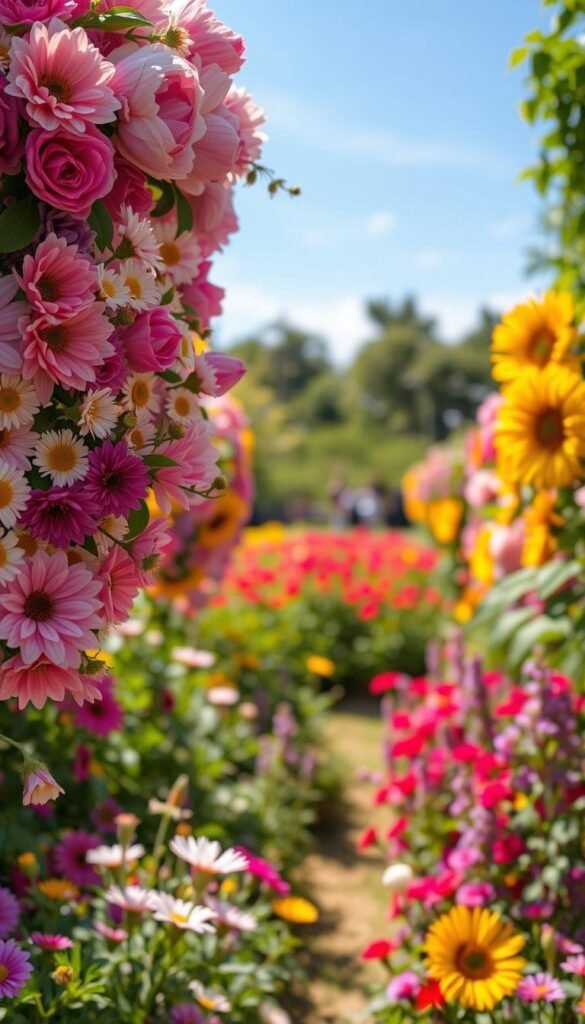
Home gardeners adore summer flowers for their toughness and stunning looks. Plants like sunflowers and zinnias keep blooming, even when it's hot. Their seasonal florals keep gardens interesting all year, from June's first flowers to September's late bloomers. They're easy to care for, perfect for both beginners and experts.
Seasonal Blooms: What to Expect
Summer's blooming schedule changes with the seasons:
- June: Peonies and roses bloom in soft pinks and whites, transitioning into warmer tones.
- July: Bold colorful blooms dominate—think deep red geraniums and golden marigolds.
- August: Drought-resistant species like lavender and coneflowers thrive, providing long-lasting color.
- September: Mums and asters provide a final burst before cooler weather arrives.
The Role of Climate in Flowering
Climate affects when and how these plants bloom. Southern gardens bloom longer, while Northern ones have shorter but intense displays. Daylight and rainfall also play a part. For example, the Pacific Northwest may need extra water for seasonal florals.
Knowing your region helps gardeners pick the best plants. Whether in Texas or Vermont, choosing the right species ensures beautiful colorful blooms all season.
Popular Types of Summer Flowers
Summer gardens come alive with sunflowers, zinnias, and hydrangeas. These garden blossoms love the warm weather. They add color and energy to any outdoor area. Let's look at three top picks for American backyards.
Sunflowers: Icons of Summer
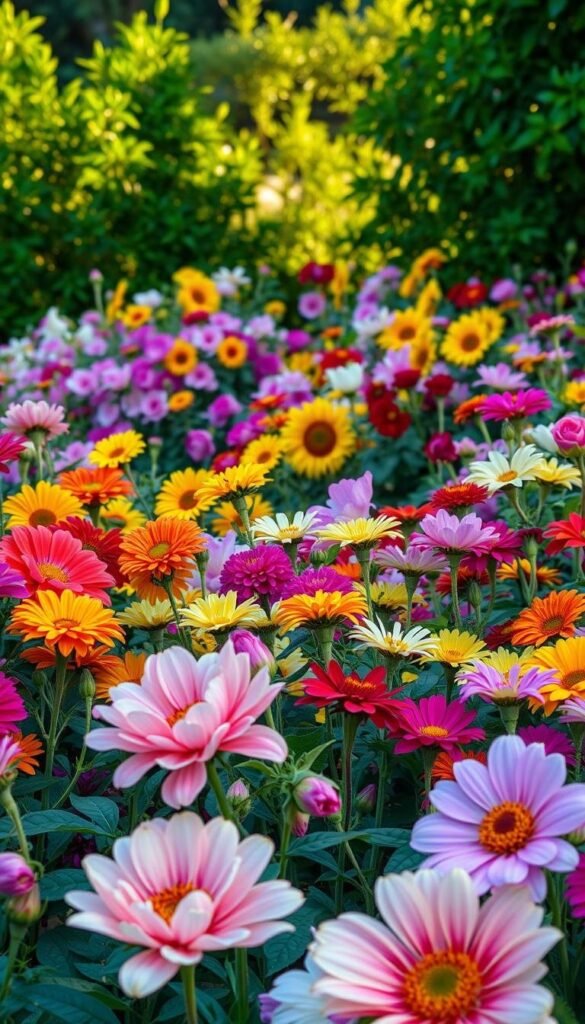
Sunflowers come in all sizes, from tall giants to small dwarfs. You can find varieties like ‘Teddy Bear’ and ‘Pro Cut Flowers’. Their bright colors, like yellow and orange, follow the sun. Plant seeds in sunny spots for a season of happy Summer Flowers.
Zinnias: Colors and Care
Zinnias show off in colors from red to lavender. They're easy to care for, making them perfect for new gardeners. Plant seeds in soil that drains well and remove dead flowers to get more blooms. Favorites include ‘Benary’s Giant’ and ‘Zahara’. They also make beautiful cut flowers that last for weeks.
Hydrangeas: A Splash of Elegance
Hydrangeas add elegance with their big flower clusters. Mophead types like ‘Endless Summer’ bloom on both new and old wood. Change the soil pH to get blue or pink blooms. Panicle hydrangeas like ‘Limelight’ love full sun, while lacecaps are more delicate. Prune them lightly in early spring for the best look.
How to Choose the Right Summer Flowers for Your Garden
Choosing the perfect warm weather flowers starts with knowing your garden's needs. This guide will help you pick varieties that do well in your garden. They will also add beauty for a long time.
Assess Your Garden’s Needs
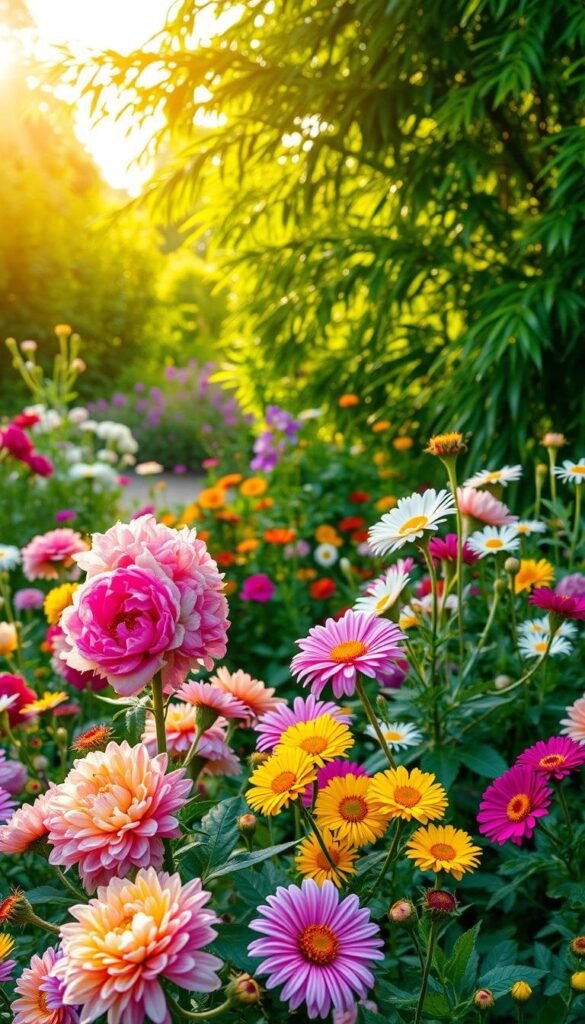
- Light: Check how much sunlight your garden gets each day. Marigolds and zinnias love full sun. Impatiens do well in shade.
- Soil: Use a home kit to test your soil's pH. Most warm weather flowers like slightly acidic to neutral soil.
- Space: Think about how big each plant will get. Vining plants like morning glories need support. Sunflowers take up a lot of space.
Plan Blooming Timing and Colors
For flowers that bloom all season, mix early, mid, and late varieties. Pair colors like red zinnias with yellow coreopsis for bright contrasts. All-pink petunias and salvia create a calming look.
Match Care to Your Lifestyle
Busy gardeners will love drought-tolerant plants like portulaca. Those who enjoy caring for plants can try hydrangeas. They bloom big with regular watering. Check the care labels to see if they fit your schedule and skills.
Tips for Planting Summer Flowers
Planting summer flowers right makes your garden come alive with outdoor blooms and vibrant petals. Follow these steps to make your garden lively and healthy:
Soil Preparation Basics
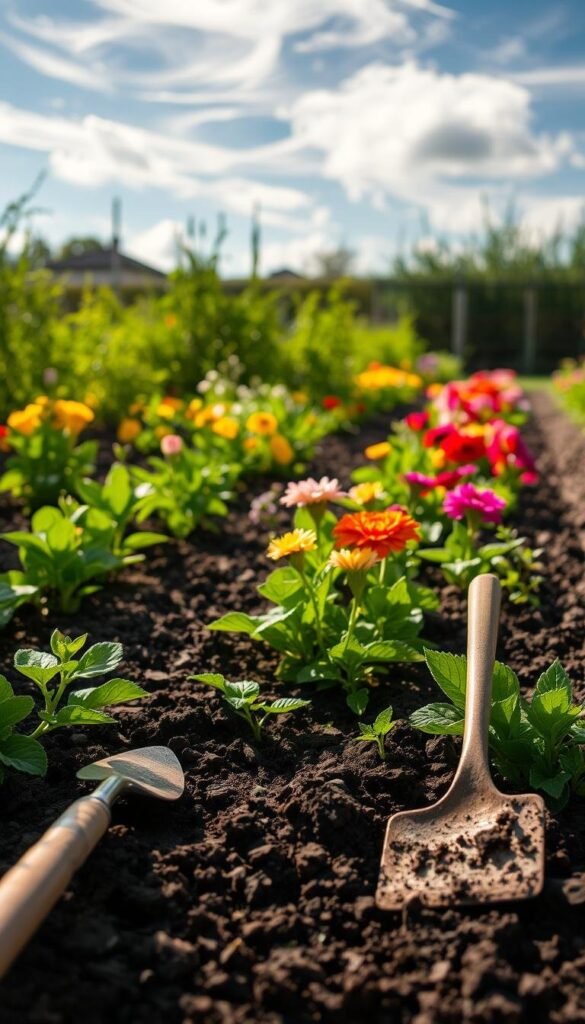
Start with soil that's rich in nutrients. Use a home kit to test the soil pH—most flowers like 6.0–7.0. Add compost or aged manure to improve drainage and fertility.
Till the soil to 12 inches deep. This removes rocks and debris.
Best Planting Techniques
- Space plants as the seed packet suggests to avoid overcrowding.
- Plant at the same depth as the nursery pot—deeper holes can harm roots.
- Water immediately after planting to settle the soil around the roots.
Transplant seedlings on cloudy days to reduce shock. Hardy varieties like marigolds handle heat better than delicate flowers.
Watering Guidelines
New plants need consistent moisture. Water deeply once or twice a week, focusing on the soil—not the leaves—to prevent disease. Mulch around plants to keep moisture in and weeds out.
Adjust watering during droughts or heavy rains.
“Aim for 1 inch of water weekly, including rainfall,” advise gardening experts.
Healthy roots mean stronger vibrant petals and more outdoor blooms. Follow these steps for a thriving summer garden!
Creating Stunning Floral Arrangements
Turn your summer flowers into stunning sunny arrangements or summertime bouquets with a few easy steps. Whether it's for a centerpiece or a kitchen table, the right tools and techniques make your garden cuts into beautiful home decor.
Choosing the Right Vase
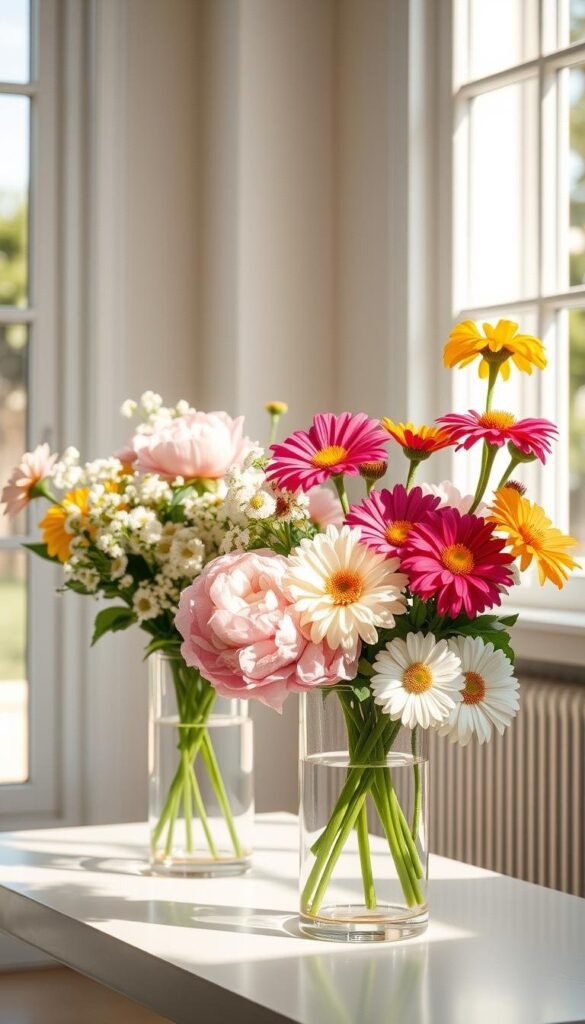
Start by picking a vase that matches your flowers' shape. Tall vases are great for sunflowers or delphiniums, while low bowls are perfect for mounded hydrangeas. Don't limit yourself to glass; try copper jugs for a rustic look or geometric ceramic pots for something modern. Make sure the vase's neck is wide enough for the stems. This allows water to flow and keeps your flowers fresh.
Color Coordination Tips
- Complementary schemes: Mix vibrant orange marigolds with blue delphiniums for a striking contrast.
- Analogous harmony: Group peach lilies, coral geraniums, and apricot cosmos for a warm, gradient effect.
- Monochromatic magic: Layer different pink shades of carnations and phlox for a cohesive look.
Seasonal Pairings for a Full Look
Combine your blooms with textural foliage like eucalyptus or fern fronds for depth. Add trailing vines like ivy for movement. For a fuller arrangement, mix tall stems (like gladiolus) with shorter filler flowers such as baby’s breath. Pro tip: Use floral foam in arrangements with varying stem lengths to keep things in place.
“A well-placed vase of seasonal flowers can transform any room.”
To make your arrangements last longer, cut stems at an angle and change the water every two days. Keep them away from direct sunlight and heat sources. With these tips, your garden's flowers can become beautiful interior art all year round.
Pest and Disease Management for Summer Flowers
Keeping Summer Flowers safe from pests and diseases is vital. It helps your garden stay full of colorful blooms all summer. Catching problems early is the best way to protect your garden naturally.
Common Pests to Watch Out For
- Aphids: Tiny, soft-bodied insects clustering on stems or leaves.
- Japanese Beetles: Metallic green bugs that skeletonize foliage.
- Thrips: Slender insects causing silvery scars on petals.
- Spider Mites: Microscopic pests leaving webbing and yellowing leaves.
Organic Solutions for Pest Control
Start with these green methods:
- Introduce lady beetles or praying mantises to eat pests.
- Make a garlic-pepper spray: Blend ingredients, strain, and spray affected plants.
- Use floating row covers to block beetles.
- Plant marigolds nearby—they deter many insects naturally.
Recognizing and Treating Diseases
Look out for these problems:
- Leaf Spot: Brown spots on leaves; remove and dispose of affected parts.
- Powdery Mildew: White patches on leaves; treat with a baking soda solution.
- Root Rot: Wilting despite watering—improve soil drainage immediately.
Keep your soil healthy and plants well-spaced to lower disease risks. Act quickly to keep your Summer Flowers looking great and disease-free.
Seasonal Flower Care and Maintenance
Keep summertime bouquets thriving with these essential care tips. Proper maintenance ensures your warm weather flowers stay vibrant through the hottest months. Whether you’re tending hydrangeas or zinnias, consistency is key.
Pruning Techniques for Healthy Growth
Regular pruning prevents leggy stems and boosts blooms. Use these steps:
- Deadheading: Remove faded flowers to redirect energy to new buds.
- Pinching: Snip stem tips of plants like coleus to encourage bushier growth.
- Seasonal cuts: Trim back overgrown perennials in midsummer for a second flush of blooms.
Fertilizing for Vibrant Blooms
Feed plants during active growth phases. Opt for balanced fertilizers labeled for flowering plants. Apply every 4–6 weeks, but avoid overfeeding as it can weaken stems. For warm weather flowers like marigolds, use slow-release pellets for steady nutrient delivery.
Managing Extreme Heat Conditions
Shield plants from scorching sun with these strategies:
- Apply 2–3 inches of organic mulch to retain moisture.
- Water early mornings to reduce evaporation.
- Use shade cloth over delicate plants during heatwaves.
Adjusting care routines keeps summertime bouquets resilient. Small adjustments now mean bigger, brighter blooms later.
Enjoying Summer Flowers in Your Home
Make your home a vibrant part of your garden with summer's beauty. These colorful blooms and outdoor blooms can thrive indoors. They add life to every room. Here's how to enjoy their beauty all year.
Indoor Floral Arrangements
Place colorful blooms where they'll shine brightest. Try these tips:
- Choose compact vases for desks or side tables to highlight sunflowers or zinnias.
- Refresh water every two days to keep blooms lively.
- Group small vases in clusters for a gallery wall effect.
Dried Flower Options
Preserve summer's essence with drying techniques:
- Air-drying: Hang bundles of lavender upside-down in a cool, dark space.
- Silica gel: Perfect for delicate hydrangeas—bury blooms in gel for 2-3 weeks.
- Pressed flowers: Use rose petals between parchment paper for 2-3 weeks.
Incorporating Flowers into Decor
- Create a floral wreath using dried eucalyptus or roses for entryways.
- Display botanical prints of outdoor blooms in living room galleries.
- Light soy candles infused with jasmine or gardenia scents for sensory appeal.
“Flowers aren't just for gardens—they're mood-makers that soften any space.”
From dining rooms to bedrooms, summer's beauty belongs everywhere. Let these blooms bridge the gap between your garden and home.
Exploring Native Summer Flowers
Summer gardens are in full bloom, and native flowers are more than just pretty. They also help the environment. Plants that grow well in your area can make your garden beautiful and support local wildlife.
Here's how to add these plants to your garden for long-term benefits.
Benefits of Native Plants
Native plants like New England aster and butterfly weed use less water. They can cut water use by up to 50% compared to other plants. These plants also fight pests without harmful chemicals.
They attract bees and butterflies, which is good for local wildlife.
Spotlight on Local Species
Find out what's popular in your area. New England aster is a hit in the Northeast. Black-eyed Susan is loved in the Southeast.
In the Midwest, coneflowers are a favorite. The Southwest's desert marigold and the West Coast's California poppy add vibrant colors. Each plant is key to its ecosystem, thriving in local soils and sunlight.
How to Support Local Ecosystems
Start by choosing a mix of native flowers for ongoing blooms. Mix sun-loving plants like butterfly weed with those that do well in shade. Buy from local nurseries or sellers approved by the Native Plant Society.
Include milkweed for monarchs and goldenrod for pollinators. Every choice you make helps your garden and supports conservation efforts across the country.