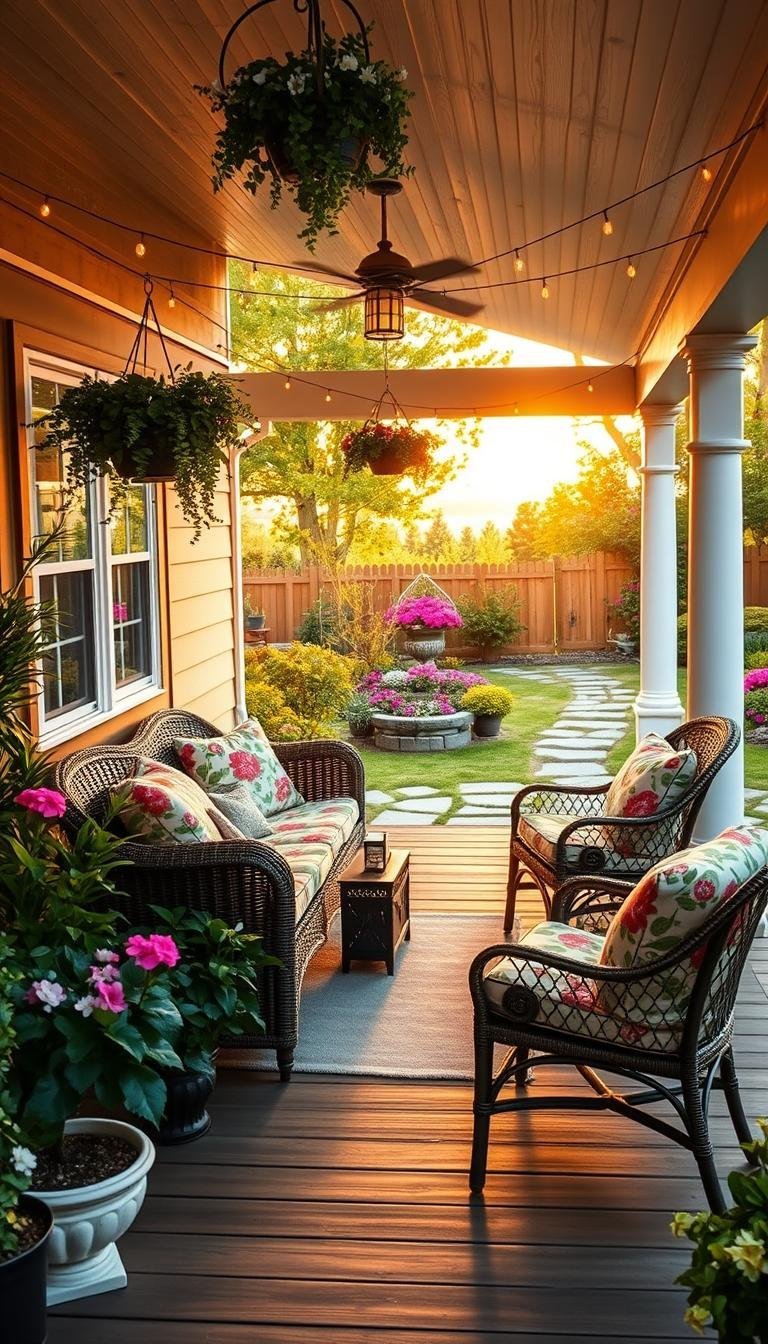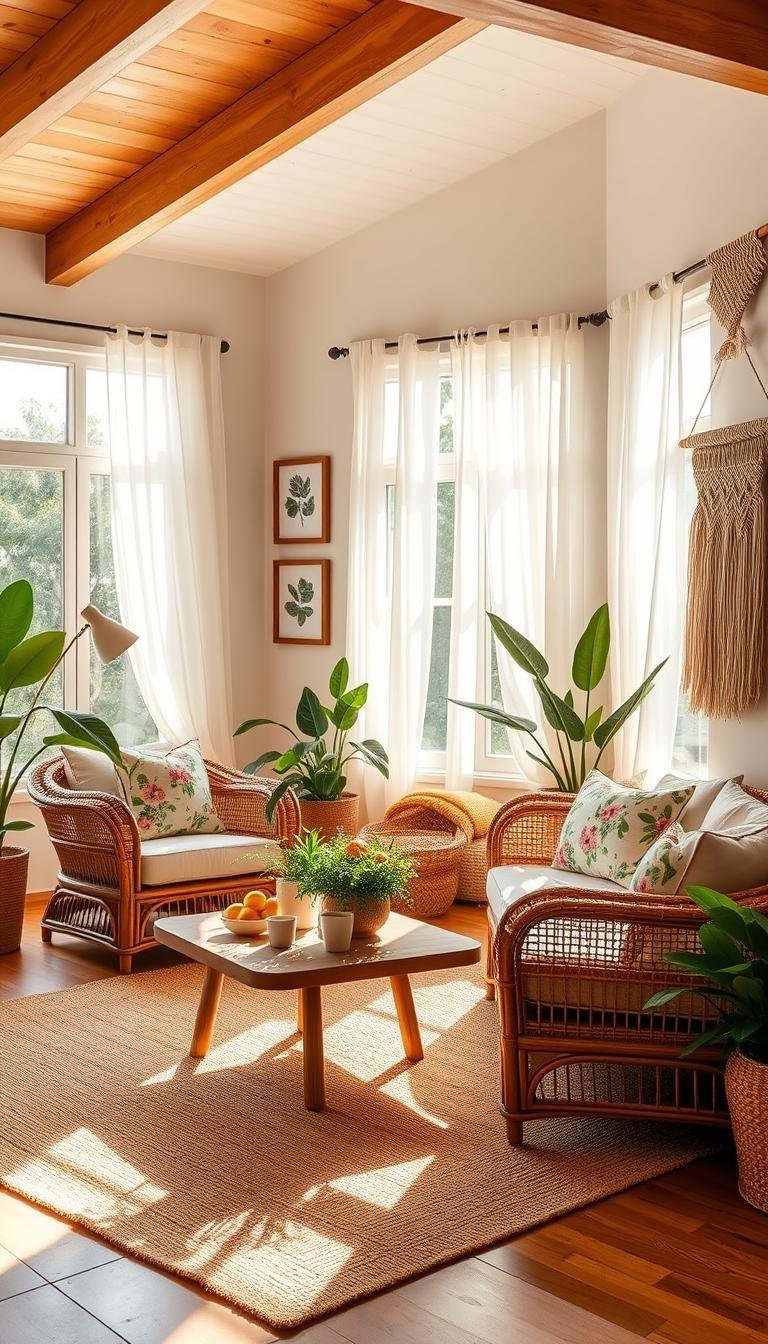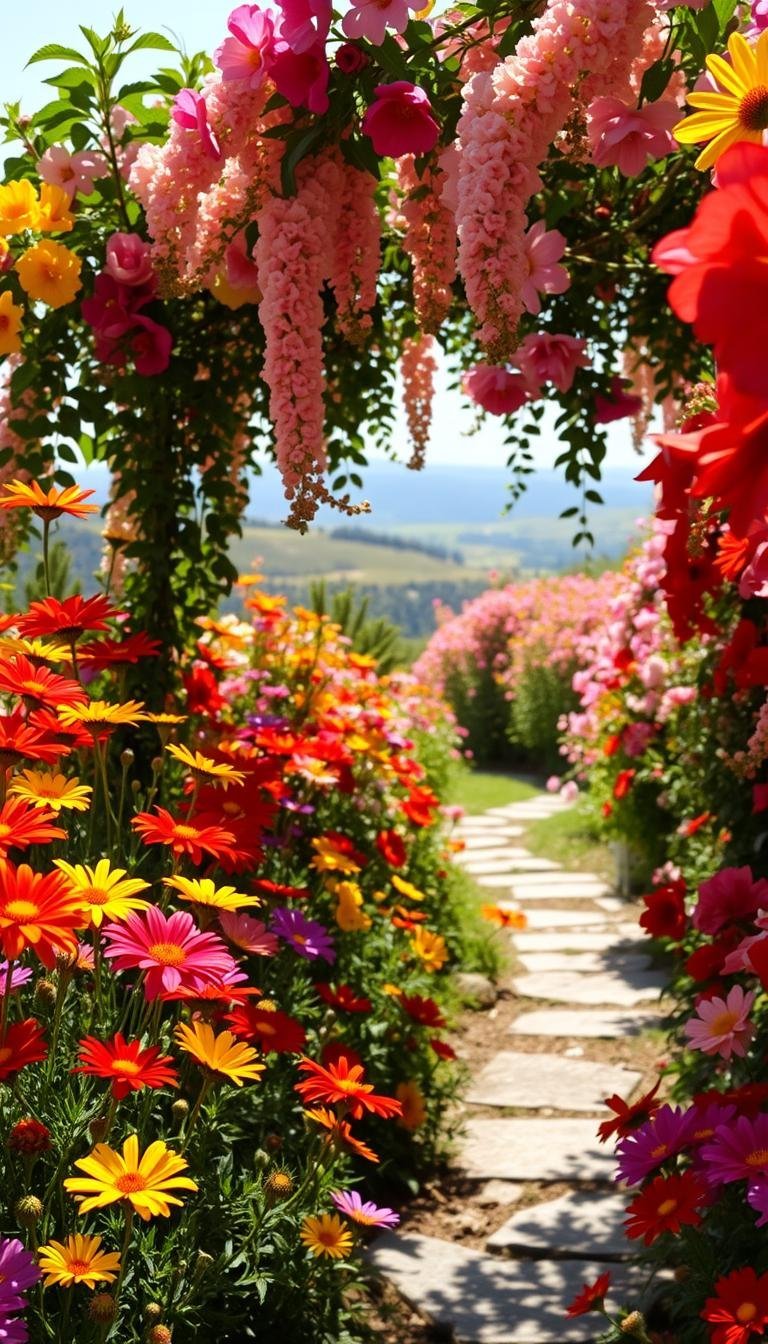
Late Summer Flowers add color when gardens start to fade. These plants love the warm weather and make yards and homes lively as summer ends. Their bright petals can handle the heat, keeping your garden looking great.
Flowers like sunflowers and asters brighten up both outdoor and indoor spaces. They bridge the gap between summer and fall. Find out how to use them to brighten up your home and garden.
This guide offers tips and ideas for enjoying these flowers indoors and outdoors. Learn which ones bloom well in the late summer heat. Also, discover how to keep them looking fresh through September.
Why Late Summer Flowers Are Essential for Your Garden
Late summer gardens should stay vibrant. Seasonal blooms like late-blooming perennials and annuals keep yards lively. They add color and life to outdoor spaces during the hottest months.
Their role goes beyond beauty. They offer practical and ecological advantages. These transform any garden into a thriving ecosystem.
The Benefits of Late Blooming Plants
These plants deliver more than visual appeal. Consider these key advantages:
- Prolonged color: Blooms extend garden beauty into fall, avoiding summer’s dull patches
- Low maintenance: Many thrive in heat, needing less watering than spring flowers
- Year-round interest: Their staggered blooming ensures continuous growth cycles
Attracting Pollinators to Your Yard
Seasonal blooms act as lifelines for pollinators. Bees, butterflies, and hummingbirds rely on late summer flowers for nectar. Plants like goldenrod and sedum serve as garden favorites that fuel pollinators preparing for migration or winter.
By planting these, gardeners support local ecosystems. They help vital species thrive. Their nectar-rich flowers beds become critical stopovers in nature’s seasonal journey.
Top Late Summer Flowers to Consider
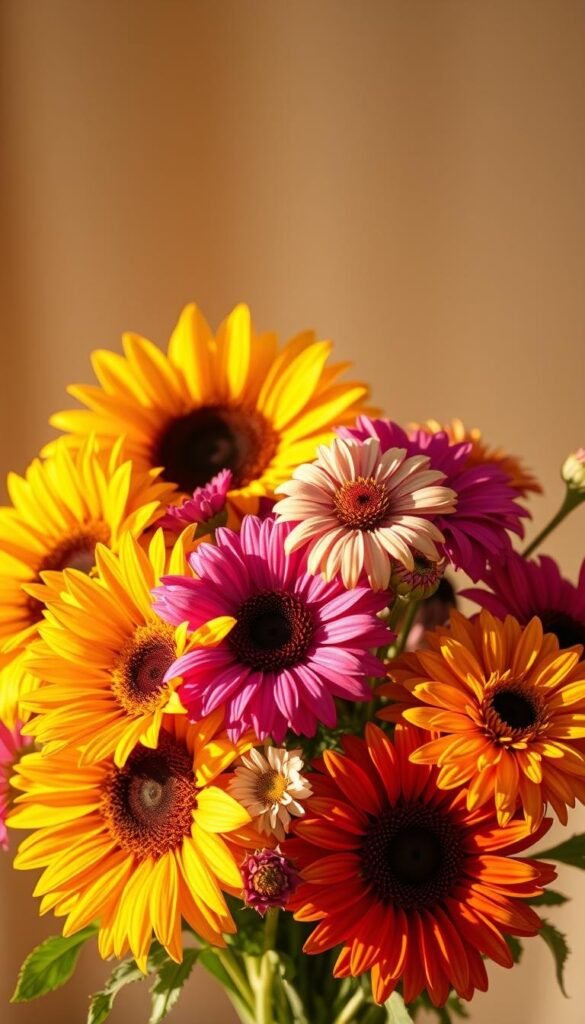
“Choosing the right late summer flowering plants can transform your garden with minimal effort,” says landscape designer Jane Green.
As summer fades, these flowering plants shine. They come in all sizes, from towering giants to compact beauties. These plants thrive in late summer heat and bring color and resilience to your garden.
Sunflowers: Icons of Cheerfulness
Sunflowers like ‘Sunrich Orange’ and ‘Mammoth Russian’ add bold charm from late summer to autumn. Dwarf varieties like ‘Taiyo’ (2 feet tall) are great for containers. Giants can reach up to 12 feet tall. Their faces follow the sun, attracting bees and birds.
- ‘Sunrich Orange’: Compact, heat-tolerant, disease-resistant.
- ‘Mammoth Russian’: Classic golden petals, ideal for cut bouquets.
- ‘Taiyo’: Dwarf yellow blooms, perfect for small spaces.
Asters: Versatile and Resilient
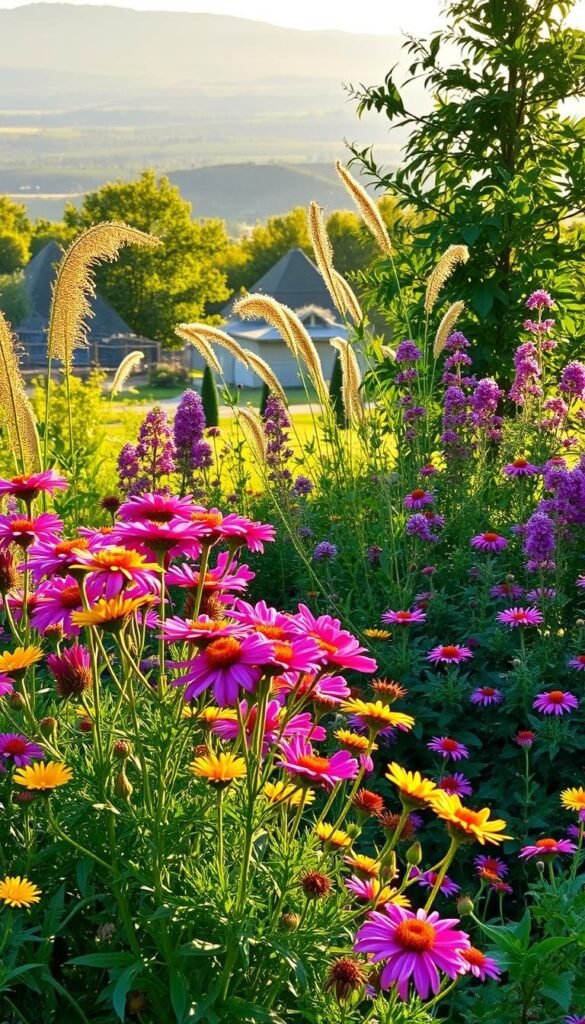
Asters, with their daisy-like blooms in purple, pink, and white, thrive in partial shade or full sun. ‘September Beauty’ and ‘Monte Video’ resist pests and bloom until frost.
- ‘Purple Dome’: Compact 18-inch mounds of lavender-blue flowers.
- ‘Monch’: White petals with yellow centers, deer-resistant.
Sedum: Low Maintenance and Beautiful
Sedum like ‘Autumn Joy’ and ‘Lemon Diamond’ need little water. Their fleshy leaves store moisture, and flower heads transition from pink to copper as fall approaches.
Choose ‘Autumn Joy’ for borders or ‘Lemon Diamond’ for rock gardens. Their star-shaped clusters bloom late summer into early fall.
Pair these picks with care tips from section 4 to create a vibrant, low-stress garden.
How to Care for Late Summer Flowers
To keep late summer blooms healthy, follow these gardening tips. They help your plants thrive in the heat and prepare for fall. Start with the right watering and feeding plans for this important time.
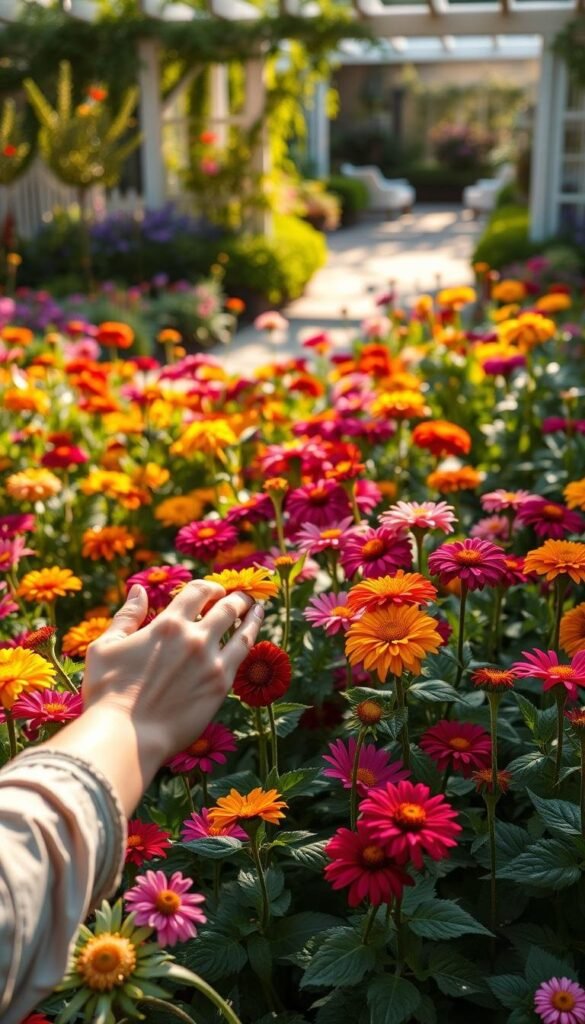
Watering Tips for Hot Weather
Change your watering schedule for the summer heat. Here's how:
- Water deeply but not too often—soak the soil 6–8 inches deep to grow strong roots.
- Water in the early morning or late evening to cut down on evaporation.
- Check if the soil is dry by poking it 2 inches deep; if it is, it's time to water.
- Use 2–3 inches of wood chips or straw around plants to keep moisture in.
Sandy soils might need more frequent checks than clay-heavy soils.
Fertilizing: Do’s and Don’ts
Balance nutrients carefully to avoid overgrowth. Focus on:
- Do: Use low-nitrogen fertilizers like compost or fish emulsion to avoid late-season foliage spikes.
- Don’t: Apply high-nitrogen blends after August to prevent tender new growth that freezes in fall.
- Do: Feed with phosphorus-rich options like bone meal to boost blooming.
- Don’t: Fertilize after September 1st to let plants harden off for winter.
Organic options like compost tea are great for gentle nutrient delivery.
Arranging Late Summer Flowers for Your Home
Turn your garden's late summer flowers into beautiful arrangements for your home. These tips will help you create stunning bouquets and choose the right containers. This way, you can enjoy the beauty of the season indoors.
Creating Stunning Bouquets
Begin by picking flowers in the morning for the best freshness. Mix bold flowers like dahlias and zinnias with soft textures like ornamental grasses or eucalyptus. Here's how:
- Clip stems at a 45° angle to help them absorb water better.
- Take off lower leaves to stop them from rotting in the vase.
- Match warm colors: orange rudbeckia looks great with deep purple asters.
Try out asymmetrical designs for a unique look. Put taller stems on one side and balance them with shorter ones like celosia or sunflowers.
Choosing the Right Vases
The type and shape of your vase are key. Glass vases highlight the colors of your flowers, while ceramic pots bring a cozy feel. Here are some ideas:
- Use vases with narrow necks to show off long stems like gladiolus.
- Wide, low bowls are perfect for showing off cosmos or marigolds.
- Try using mason jars or copper buckets for a rustic look.
Change the water level every two days and trim stems weekly to keep your arrangements fresh. Let your home celebrate summer's end with every bouquet.
Incorporating Late Summer Flowers into Landscape Design
Using Late Summer Flowers in your garden makes it come alive with color and texture. By placing them wisely, your plants will become garden favorites that bloom beautifully until autumn. Here's how to create stunning layouts.
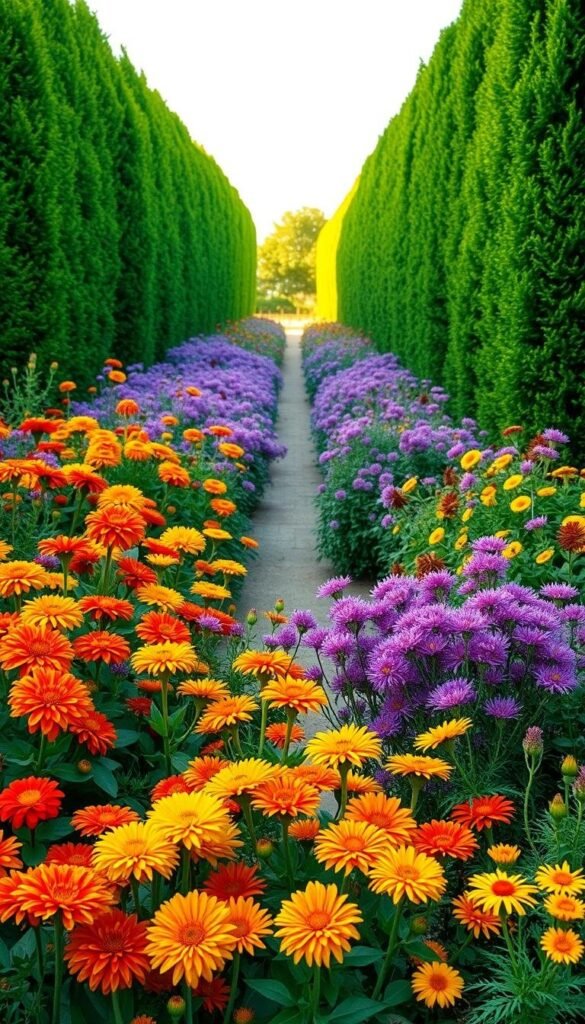
Color Schemes That Work
- Pair rich purples (asters) with golden yellows (black-eyed Susans) to mirror sunset hues.
- Blend warm tones like orange marigolds with deep red dahlias for autumnal warmth.
- Use silver foliage (lamb’s ear) to balance vibrant blooms and reflect soft light.
Layering Techniques for Depth
- Anchor borders with towering plants (Joe Pye weed) for height.
- Fill mid-level spaces with mounded shapes (sedums) and trailing varieties (sweet alyssum) at ground level.
- Experiment with staggered groupings—like clusters of coneflowers and liatris—to add movement.
These tips can turn any garden into a layered, colorful masterpiece. Whether you stick to classic designs or try new combinations, every choice should showcase the beauty of late summer flowers.
Seasonal Care for Your Late Summer Blooms
Keeping gardens vibrant through seasonal shifts is key. These gardening tips help summer flowers stay healthy for autumn. Proper care now makes the transition smoother.
Deadheading for Continued Growth
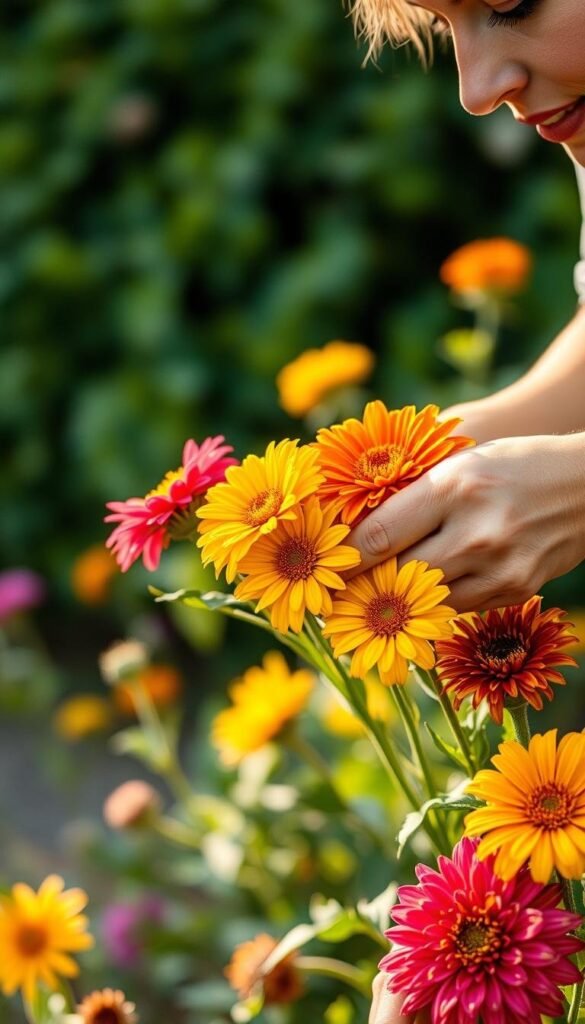
Deadheading is more than cleaning up. It tells plants to focus on new growth, not seeds. For summer flower care, regularly remove spent flowers. Here's how:
- Marigolds: Snip faded heads with fingers to encourage more blooms.
- Coreopsis and salvias: Cut stems back by one-third to prompt reblooming.
- Leave seed heads on coneflowers or black-eyed Susans if you want to feed birds or save seeds.
Preparing for Fall Transition
Autumn prep begins in late summer. Slow transitions protect plants from shock:
- Stop deadheading mums and asters by mid-September to allow seed development.
- Reduce watering frequency but keep soil moist until cooler weather arrives.
- Trim overgrown perennials lightly to avoid winter damage without severe cuts.
- Journal which plants thrived this season for future planting choices.
Small adjustments now lead to healthier gardens next year. Your efforts will reward you with resilient blooms and smart planning.
Late Summer Flower Festivals and Events
Explore the beauty of late summer flowers at festivals and botanical events. These celebrations showcase seasonal blooms with colorful displays and activities. They inspire and bring people together.
Discovering Local Botanical Garden Display
Botanical gardens become living art in late summer. They feature botanical garden display with themed exhibits like sunflower mazes. Guided tours and workshops teach about plant care and design.
Many gardens also host photography contests and plant sales. Here, you can find new plants for your garden.
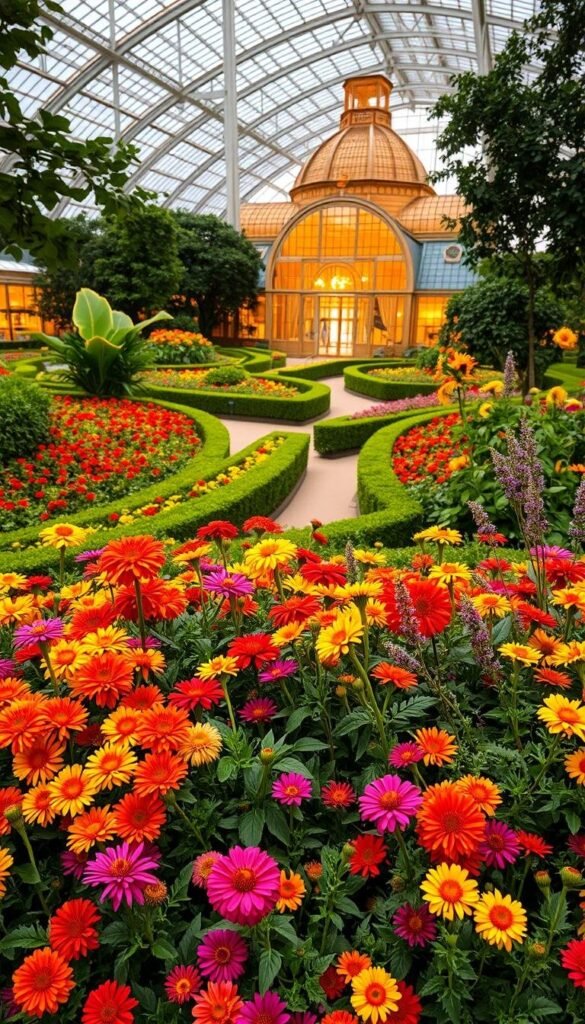
“A well-planned botanical garden display teaches gardeners how to layer colors and textures.” – Local horticulturist
Celebrating Harvest Festivals
Harvest festivals mix late summer flowers with farm traditions. They feature flower competitions and dahlia showcases. You can also try flower-infused foods and make crafts from seasonal blooms.
Check local listings for dates. Many events peak in August and September in the U.S.
- Visit state park flower festivals for free entry days
- Join hands-on planting demos at fairgrounds
- Sample flower-infused foods at festival vendors
These events offer guided walks and workshops like daisy chain-making. They turn seasonal blooms into shared joy. Plan a visit to a botanical garden display in August or catch a harvest festival before autumn.
DIY Projects with Late Summer Flowers
Turn your garden's late summer flowers into beautiful home decor. You can make vibrant floral arrangements or preserve petals. These ideas help you enjoy the beauty of flowering plants even after they fade. Start making today to bring summer's spirit into your home.
Crafting Natural Centerpieces
Make rustic centerpieces with sunflowers, berries, and wheat stalks. Add asters and dried hydrangeas for a unique touch. Here's how to do it:
- Choose sturdy vases or mason jars as bases.
- Add greens like eucalyptus or curly willow for structure.
- Layer flowers and filler materials, leaving space for seasonal fruits like pears or persimmons.
- Secure stems with floral tape for stability.
Tip: Use floating arrangements with water hyacinths or lilies in glass bowls for modern looks.
Pressed Flower Artistry
"Pressed petals become delicate masterpieces, freezing summer’s color in time." – Garden Design Magazine
Preserve your favorite flowers like cosmos and black-eyed Susans. Here are two methods:
- Book Pressing: Layer tissue paper between pages of heavy books for 2-3 weeks.
- Microwave Method: Use wax paper and a microwave-safe plate for quick results (30-second intervals).
Decorate with pressed flowers in these ways:
- Customized greeting cards
- Candle holders with embedded petals
- Clear resin coasters
Make coasters by gluing petals to clear resin. These projects bring summer's beauty into winter.
Common Pests and Diseases to Watch For
Protecting flowering plants in late summer means knowing the threats. Early detection is key to a thriving garden. Here are some gardening tips to keep your blooms safe from common problems.
Identifying Common Pests
Look out for these insects that harm plants:
- Japanese beetles: Metallic green bodies eating leaves, leaving them with lace-like patterns.
- Spider mites: Tiny spiders causing yellow spots on leaves; they love dry conditions.
- Aphids: Soft-bodied insects on stems, leaving a sticky mess.
- Caterpillars: Eat big holes in leaves; some prefer certain flowering plants.
Effective Treatment Options
Here's a simple, eco-friendly plan:
- Handpick pests like beetles and caterpillars every day.
- Use insecticidal soap or neem oil sprays for soft-bodied insects.
- Bring in ladybugs or lacewings to fight aphids naturally.
- Apply horticultural oil in winter to stop pests from coming back.
For diseases like powdery mildew (white on leaves) or rust (orange spots), cut off infected parts right away. Make sure plants have enough space for air to flow. Use sulfur or copper fungicides if the problem gets worse.
Healthy soil and resistant plants help a lot. Regular checks are essential for keeping your flowering plants looking great with these gardening tips.
Planning Ahead: Late Summer to Fall Transitions
As summer ends and autumn begins, your garden can stay beautiful. Late Summer Flowers help make the transition smooth. They keep your outdoor space colorful and interesting all through fall.
Choosing Fall Varieties
Find plants that bloom from late summer into autumn. Japanese anemones and early chrysanthemums are great choices. They add beauty when many summer flowers are gone.
Toad lilies do well in partial shade, adding unique flowers. Clematis like ‘Hagley’ bloom late, adding to the beauty. Ornamental grasses also add to the garden, with their feathery plumes and warm colors.
Seasonal Maintenance Checklist
Keep your garden healthy with regular care. Divide perennials in early September to help them grow. Stop fertilizing by mid-August to prevent late growth that might freeze.
Water less often but deeply if it's dry. Mulch tender plants like roses as it gets colder. Also, remember which flowers did well. This helps plan for next year's garden.