Decorating a small living room can seem tough, but it's doable. With the right tips, you can make your space stylish and useful. We know how hard it is to decorate small spaces and we're here to help.
Interior design is all about mixing looks and uses. In a small room, pick furniture and decor that do more than one thing. This way, you can make your room look bigger and feel more welcoming.
Key Takeaways
- Optimize furniture for multi-functionality
- Utilize light colors to create a sense of space
- Select decor that serves a purpose
- Create a cohesive aesthetic with a limited color palette
- Make the most of vertical space
The Challenges and Opportunities of Small Space Living
Living in small spaces can spark new design ideas. It's key to see both the hurdles and the chances that come with them in compact living rooms.
Common Space Limitations in Modern Homes
Modern homes often struggle with space due to city density and high real estate costs. These issues can make living areas feel cramped and cluttered. Common problems include too little room, odd layouts, and not enough storage.
Why Small Spaces Can Actually Be Design Advantages
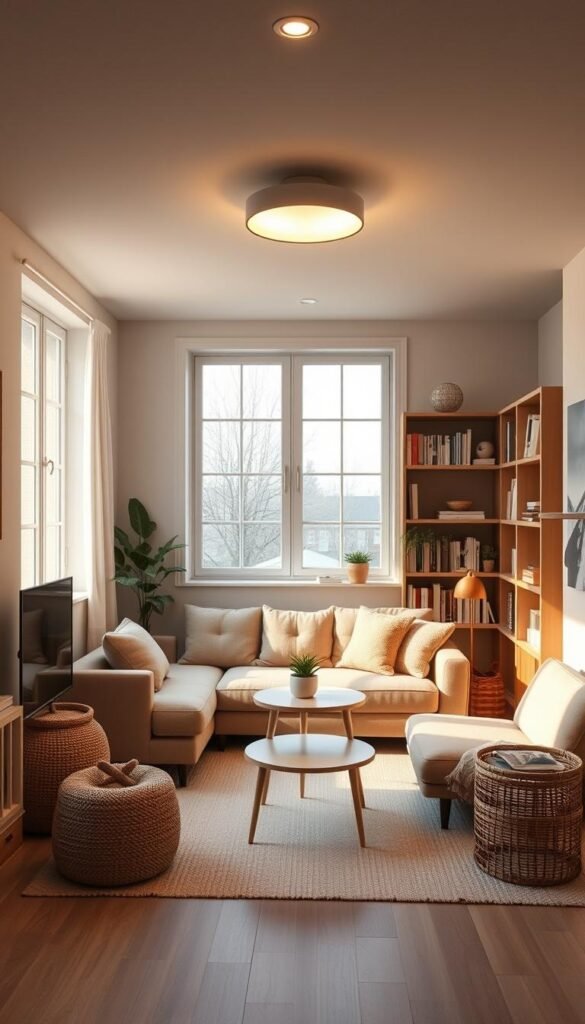
Small spaces, though tough, bring design benefits. They push for creativity and simplicity, helping homeowners pick what's truly important. This way, they can make a space that's both stylish and practical, showing off their personal taste.
Understanding these points helps homeowners turn small space living into a chance to create a lovely and useful living room.
Smart Furniture Selection for Small Living Rooms
To make a small living room stylish and functional, picking the right furniture is key. The right pieces can make your space feel bigger, more welcoming, and very useful.
Multi-Functional Furniture Pieces That Save Space
Choosing multi-functional furniture is a smart move for small living rooms. These items do more than one thing, cutting down on clutter and making the most of your space.
Sofa Beds and Convertible Options
Sofa beds are perfect for small living rooms. They offer both a place to sit and sleep. Look for sleek designs and neutral colors to keep the room feeling open.
Nesting Tables and Expandable Furniture
Nesting tables are another smart choice. They can be tucked away under bigger furniture when not needed, but expand for parties or work.
Scale and Proportion Guidelines
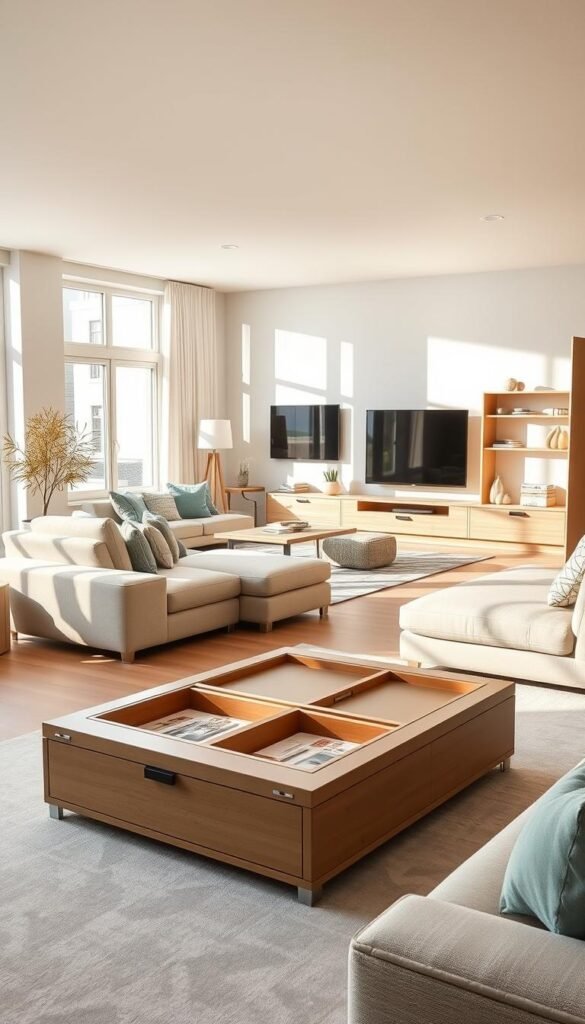
When picking furniture for a small living room, size and shape matter. Choose items that fit well with your room's size, avoiding big pieces that can make it feel tight.
- Measure your room and furniture carefully before buying.
- Go for slim furniture to keep the room feeling open.
- Consider multi-functional pieces to cut down on furniture.
Space-Saving Alternatives to Traditional Furniture
Explore beyond traditional furniture to find space-saving options. Wall-mounted shelves can replace heavy bookcases, and ottomans with storage can be both seats and storage.
By choosing furniture that's both stylish and practical, you can turn a small living room into a spacious, welcoming space that meets your needs.
Strategic Layout Planning for Maximum Functionality
To make the most of a small living room, planning the layout is key. A well-thought-out layout can greatly improve how the space feels and works.
Creating Effective Traffic Flow Patterns
First, think about the traffic flow in your small living room. Effective traffic flow patterns help make the room feel bigger. Arrange furniture so it doesn't block paths.
- Make sure there's enough space between furniture for easy movement.
- Avoid furniture that makes narrow pathways.
- Try a floating furniture setup to enhance flow.
Furniture Arrangement Techniques for Small Spaces
Furniture arrangement is vital in small living rooms. Scale is important, so pick furniture that fits the room size. Here are some tips:
| Furniture Piece | Arrangement Tip | Benefit |
|---|---|---|
| Sofa | Place against a wall, choose a sleek, low-profile design. | Creates more floor space. |
| Coffee Table | Go for a nesting or storage coffee table. | Offers flexibility and storage. |
| TV Stand | Choose a wall-mounted or compact unit. | Saves floor space and reduces clutter. |
Zoning Strategies in Open-Concept Small Living Rooms
In open-concept small living rooms, zoning strategies are key. They help define areas without walls. Let's look at ways to create visual boundaries and define spaces.
Defining Areas Without Walls
Use rugs and lighting to define areas. A rug can mark a seating area, while different lights can set moods in zones.
Creating Visual Boundaries
Visual boundaries can be made with furniture placement and decorative elements. For instance, a console table behind a sofa can separate the seating area from the rest of the room.
"The way you arrange your furniture can either make the room feel bigger or smaller. It's all about creating a flow that works for you."
Color Schemes That Visually Expand Your Small Living Room
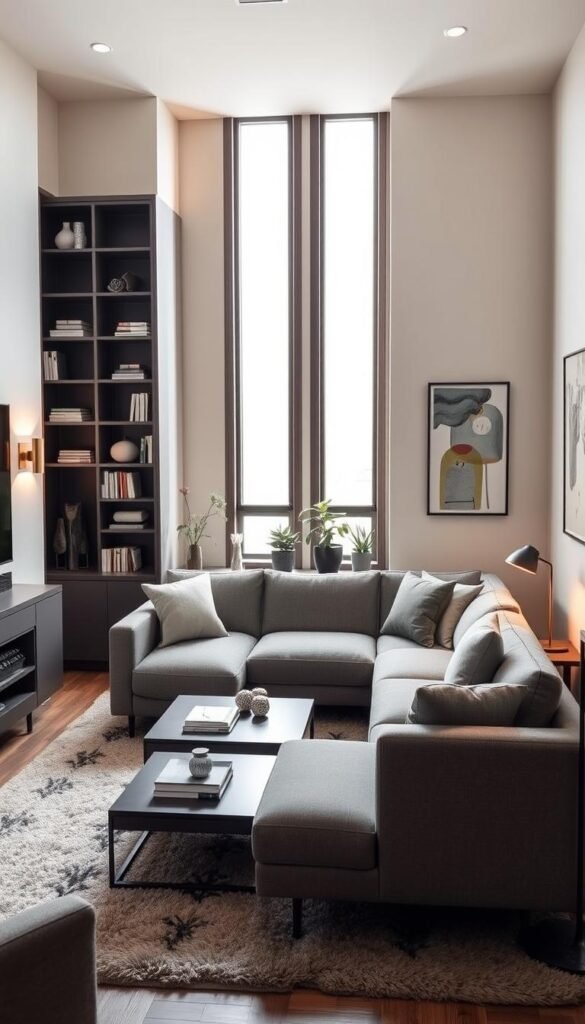
A well-chosen color scheme can make a small living room feel bigger and more welcoming. The right colors can trick the eye into seeing more space. They also improve the room's feel and look.
Light and Neutral Base Color Palettes
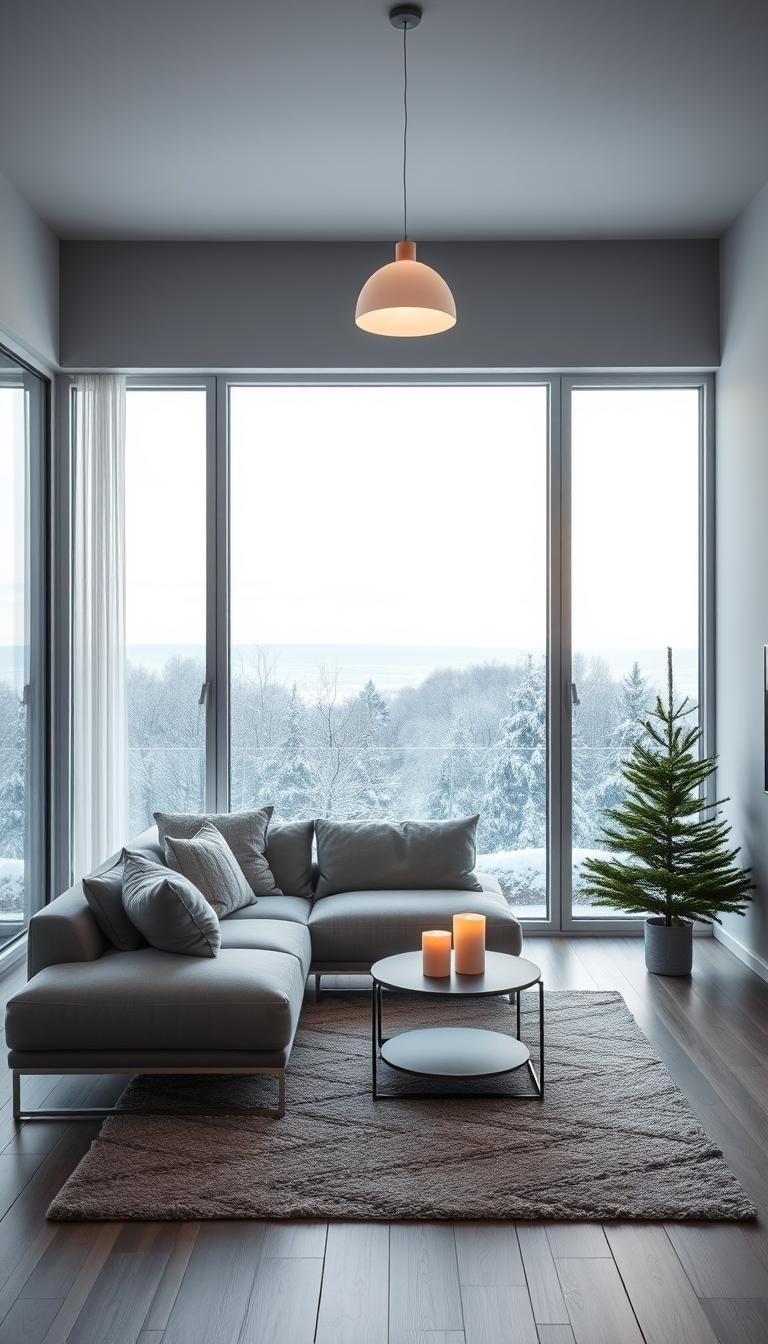
Start with light and neutral colors to open up the space. White, beige, and soft grays make walls seem to disappear. This creates the illusion of more room. These colors also let you add bold colors through furniture and decor easily.
Strategic Use of Accent Colors and Contrast
Accent colors add depth and interest to a small living room. A bold or bright color in throw pillows, rugs, or art creates contrast. This contrast can make the room feel bigger. But, don't overdo it – too many colors can make it feel crowded.
Color Psychology Principles for Compact Spaces
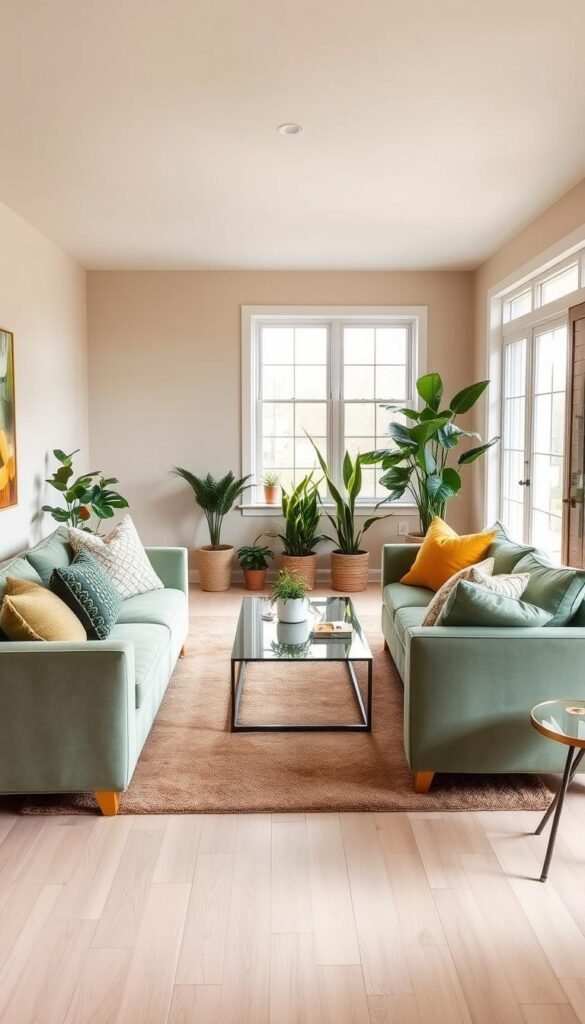
Color psychology helps pick colors that improve your small space's mood. Cool colors like blues and greens calm the atmosphere. Warm colors like oranges and yellows energize the space.
| Color | Psychological Effect | Best Use In |
|---|---|---|
| Blues | Calming, Trusting | Bedrooms, Reading Nooks |
| Greens | Balancing, Refreshing | Living Rooms, Home Offices |
| Oranges/Yellows | Energizing, Uplifting | Kitchen, Dining Areas |
By choosing colors wisely and using color psychology, you can make a small living room feel bigger and more inviting.
Lighting Solutions to Brighten and Enlarge Small Spaces
Effective lighting can make a small living room feel bigger and more welcoming. Let's look at how to use lighting to make the most of your small space.
Maximizing Natural Light Sources
To brighten a small living room, use natural light to your advantage. Keep windows clear and use sheer curtains to let sunlight in while keeping things private. Designer Nate Berkus says, "Natural light is the best; it's free and amazing."
"The way you light your home has a huge impact on its overall feel and function."
Layered Lighting Techniques for Depth
Layered lighting adds depth to small spaces. It involves using different light sources for a balanced look.
Ambient, Task, and Accent Lighting Balance
Start with ambient lighting for overall light. Then, add task lighting for activities like reading. Use accent lighting to highlight special features or decorations. Mix ceiling lights, table lamps, and floor lamps for a layered look.
Space-Enhancing Light Fixture Selection
Choose light fixtures that are sleek and don't take up too much space.
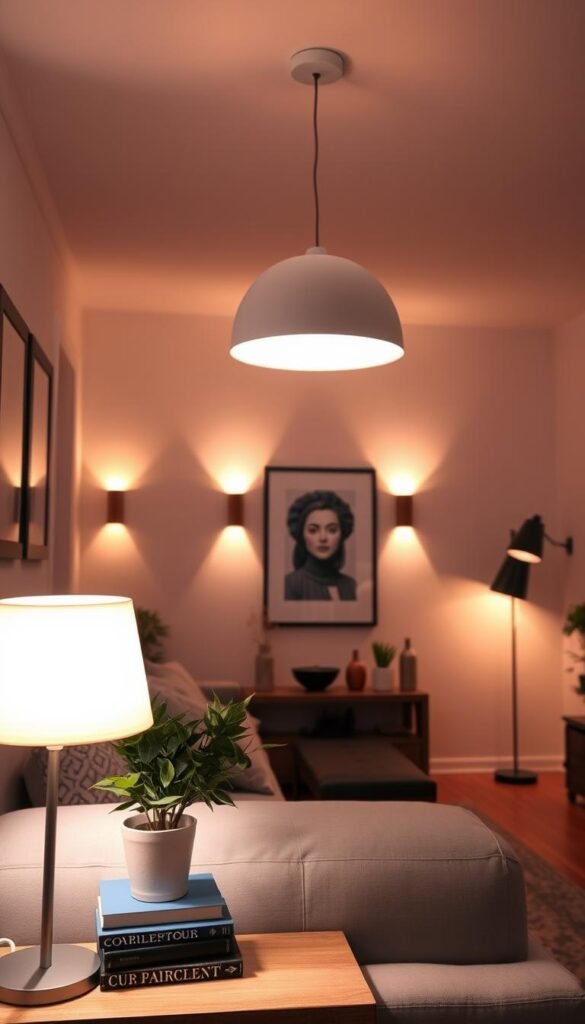
Go for recessed or flush-mount lights to keep the ceiling clean. The aim is to light up your space without using big, bulky lights.
Wall Decor and Art That Works in Compact Areas
The right wall decor and art can make a small living room stylish. It's important to pick pieces that fit well with the room and its furniture.
Scale-Appropriate Art Selection and Arrangement
Choosing art that matches the wall size is key. A big piece can stand out, while smaller ones can be grouped for a gallery look. Make sure the frame style and color match the room's decor.
Strategic Placement for Visual Impact
Where you place art matters a lot. Hang it at eye level, between 57 and 67 inches from the floor. For big pieces, think about the ceiling and furniture to get a balanced look.
Using Mirrors to Create Depth and Reflection
Mirrors can make a room look bigger by reflecting light and images. Placing mirrors right can add depth and make the room seem larger.
Mirror Placement Tricks for Space Enhancement
To get the most out of mirrors, place them opposite windows to reflect light. Or, put them opposite a main feature to make the room seem bigger. Here's a quick guide:
| Mirror Placement | Effect |
|---|---|
| Opposite a window | Reflects natural light, brightening the room |
| Opposite a focal point | Creates the illusion of more space |
| Above a sofa or fireplace | Adds depth and creates a sense of height |
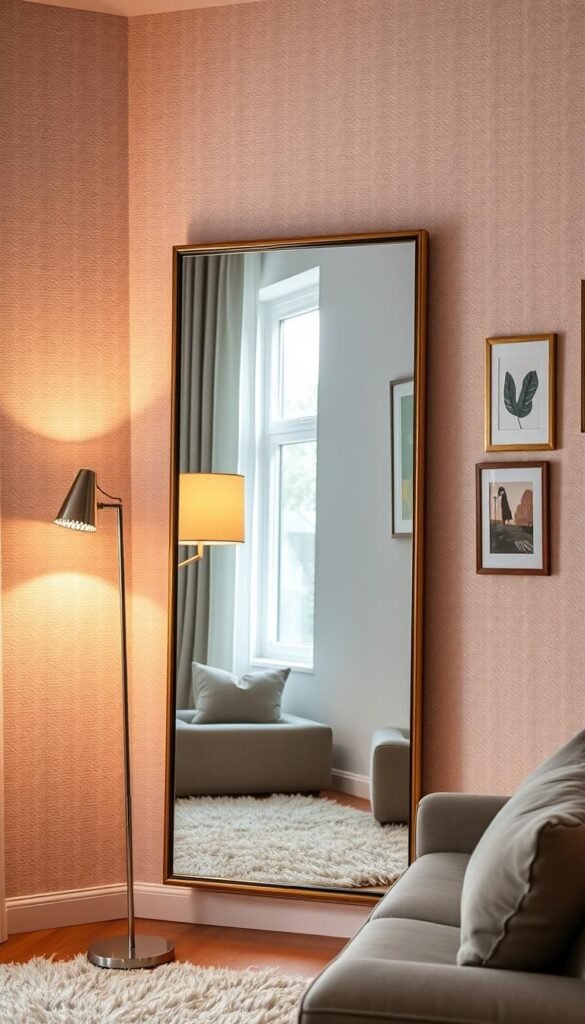
By carefully choosing and placing wall decor and art, you can make your small living room look better and feel bigger.
Stylish Storage Solutions for Small Living Rooms
Let's look at how to add storage in small living rooms without losing style. Good storage keeps your space tidy and looking great.
Hidden and Built-In Storage Opportunities
Using hidden and built-in storage is a smart way to save space. Ottomans with storage and under-sofa drawers are great. They offer extra storage and are useful pieces of furniture.
Decorative Storage Pieces That Double as Decor
Decorative storage can make your living room look better while keeping it organized. Think about using woven baskets or decorative boxes that match your room's style. They can hold things like throw blankets, books, or magazines, keeping them hidden.
Vertical Storage Strategies to Maximize Wall Space
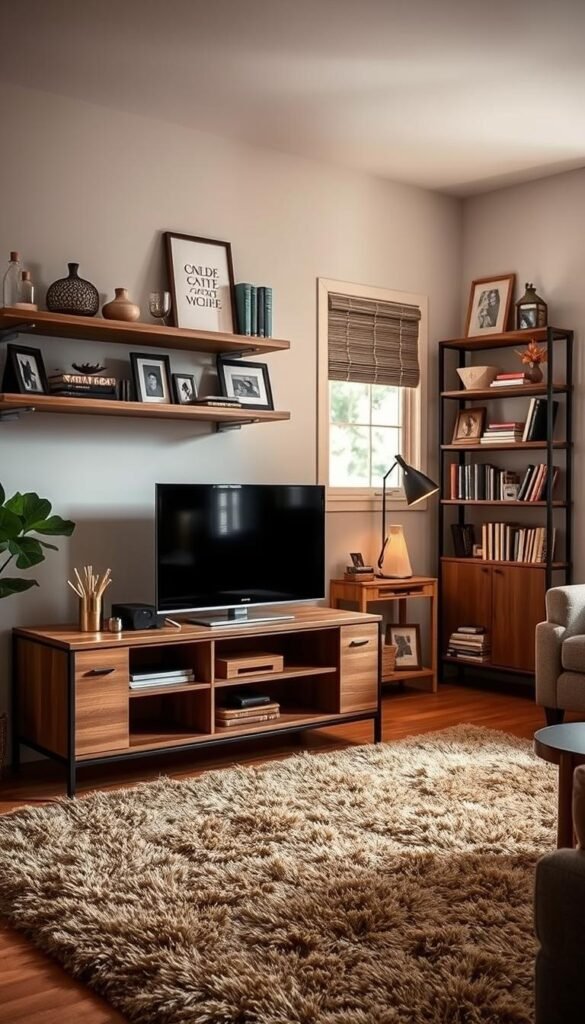
It's key to use wall space well in small living rooms. Floating shelves and wall-mounted cabinets are perfect for storing books, decorations, and more. They don't take up floor space.
Floating Shelves and Wall-Mounted Options
Floating shelves are flexible and can hold decorations or everyday items. Wall-mounted cabinets and hooks also help organize your belongings.
Floor-to-Ceiling Solutions
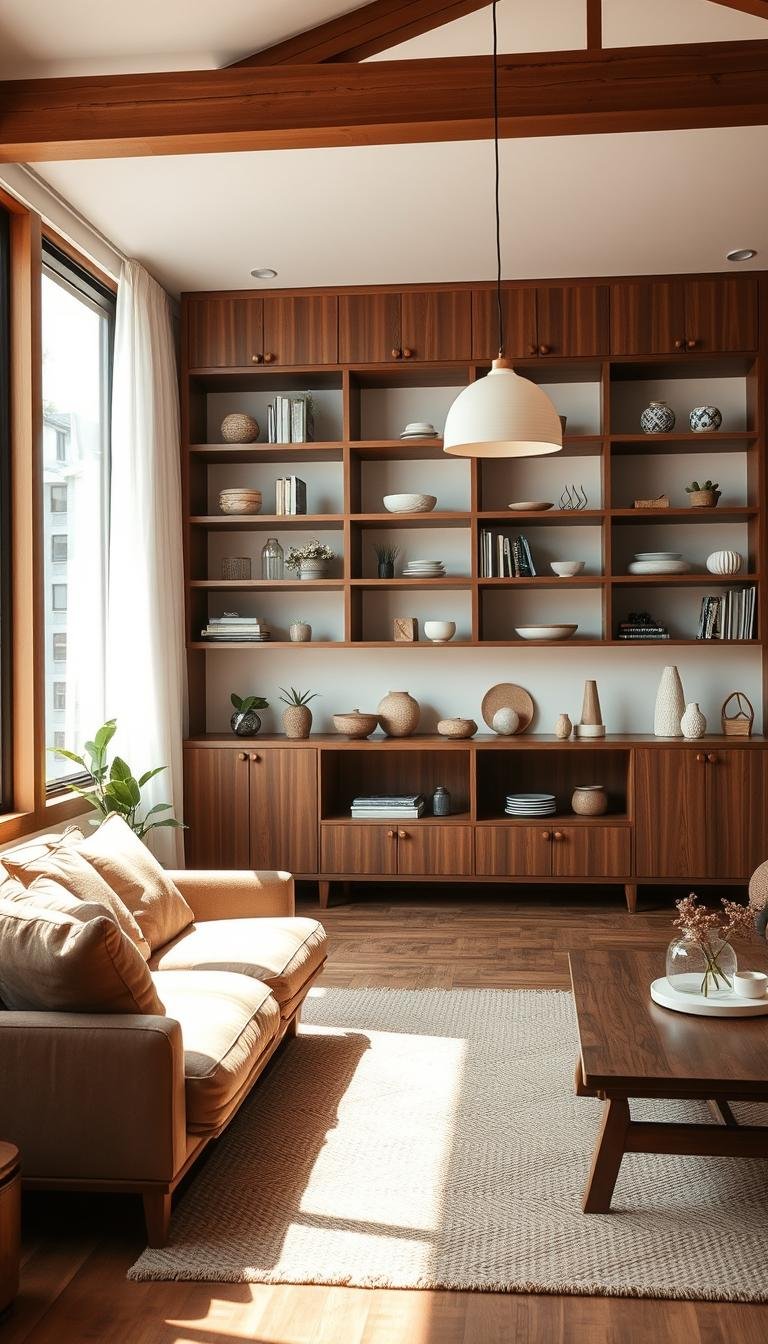
For the most storage, try floor-to-ceiling shelving units or storage ladders. They use your ceiling height and offer lots of space for books, decorations, and more.
By adding these stylish storage ideas, you can keep your small living room tidy and stylish.
Textile Choices That Enhance Small Living Room Design
Textiles are key in making a small living room stylish and functional. The right choices can turn a tight space into a cozy spot.
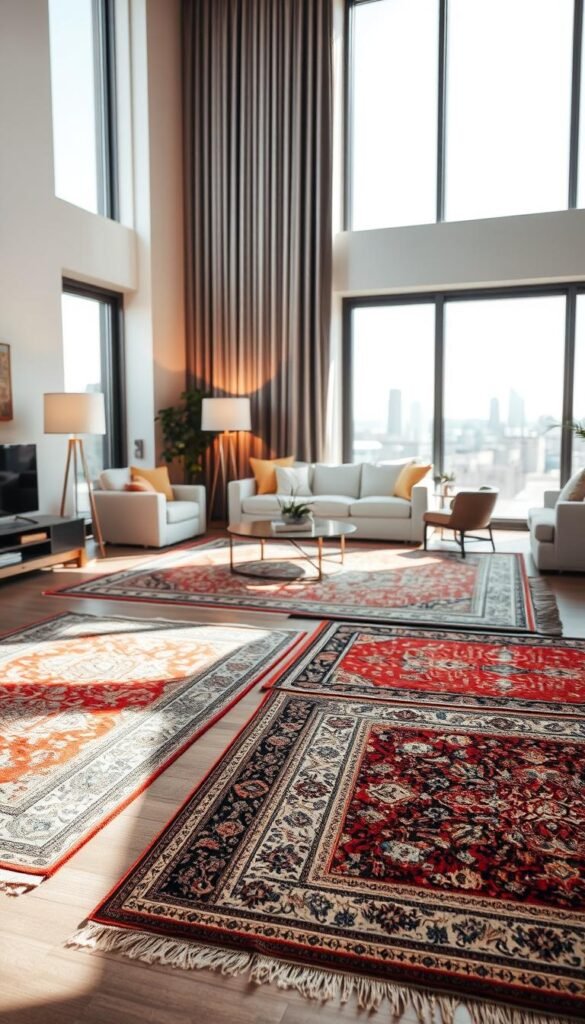
Area Rug Selection and Placement Guidelines
Area rugs can split a small living room into zones and warm the floor. Pick a rug that matches the room's colors and furniture. A light-colored rug can make the room look bigger.
Where you place the rug is also important. A well-placed rug can help move around the room better.
Window Treatment Strategies for Small Spaces
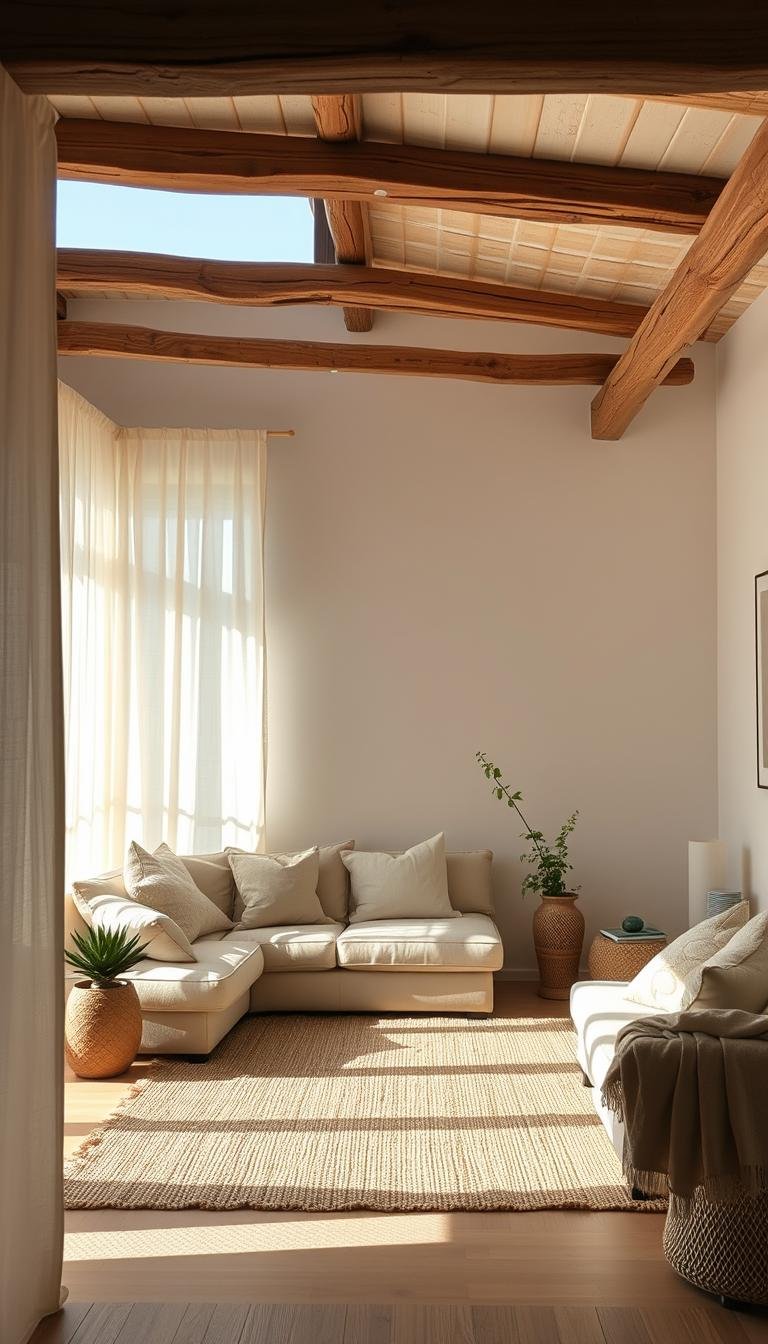
Window treatments can change how a small living room looks. Light, airy curtains or blinds can make the room feel bigger. Sheer fabrics or curtains near the ceiling can make ceilings seem higher.
Throw Pillows, Blankets, and Soft Furnishings
Throw pillows, blankets, and soft furnishings add texture and interest. Mixing textures and patterns creates a cozy feel. But, don't overdo it to avoid clutter.
| Textile Element | Purpose | Design Tip |
|---|---|---|
| Area Rugs | Define space, add warmth | Choose a lighter color to expand the space visually |
| Window Treatments | Control light, enhance space | Use sheer fabrics to reflect natural light |
| Throw Pillows and Blankets | Add texture, visual interest | Mix different textures and patterns for a layered look |
Incorporating Plants and Natural Elements in Limited Space
Bringing the outdoors in, plants can turn a small living space into a cozy retreat. Adding plants and natural elements to your small living room makes it look better and healthier.
Space-Appropriate Plant Selection for Small Rooms
Choosing the right plants for small spaces is key. Pick compact or trailing plants that won't take over the room. Some great choices include:
- Snake Plant: Known for its air-purifying properties and low maintenance.
- Pothos: A versatile, trailing plant that thrives in various lighting conditions.
- ZZ Plant: Tolerates neglect and low light, making it perfect for small, dimly lit rooms.
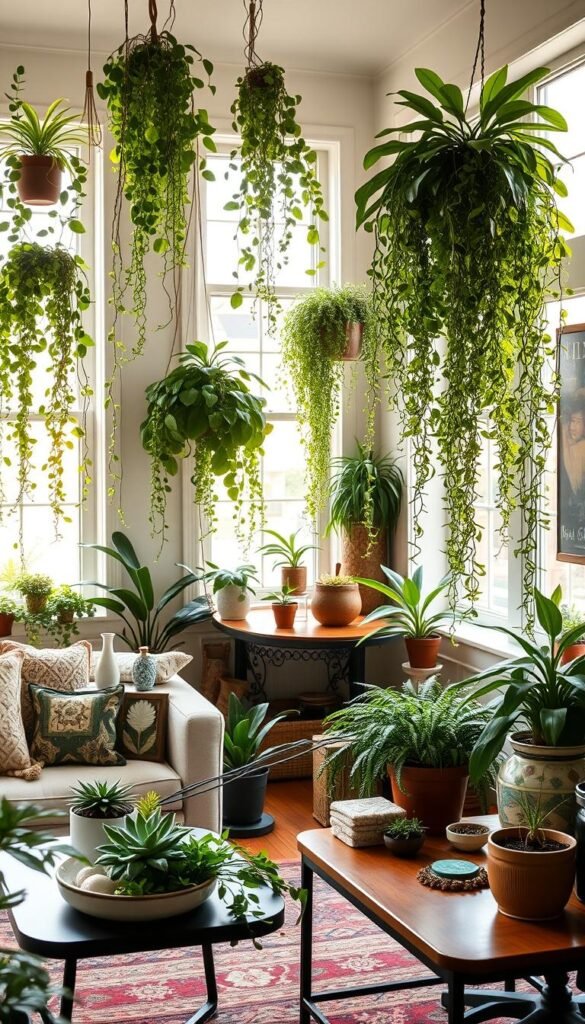
Creative Plant Display Ideas for Vertical Spaces
Using vertical space can make your small living room feel bigger. Think about:
- Wall-mounted planters to add greenery without taking up floor space.
- Hanging baskets or macramé hangers for a bohemian touch.
- Shelves with built-in planters for a multi-tiered display.
Benefits of Bringing Nature into Compact Living Areas
Adding plants to your small living room has many benefits, including:
| Benefit | Description |
|---|---|
| Air Purification | Plants absorb toxins and release oxygen, improving indoor air quality. |
| Mood Enhancement | Greenery has been shown to boost mood and reduce stress levels. |
| Aesthetic Appeal | Plants add color, texture, and life to your living space. |
Technology Integration in Your Small Living Room
Adding technology to your small living room can make it more useful and cozy. Smart solutions help create a stylish and practical space.
Streamlined Entertainment Solutions
For an efficient entertainment setup, think about a wall-mounted TV and a soundbar. This combo saves room and cuts down on mess. A media console with built-in storage is also a good idea. It keeps devices and cables in order.
Smart Home Features That Save Space
Smart home devices can really improve your living room. Look into voice-controlled lighting and thermostats that you can control from afar. These features are handy and don't take up much space.
Cable Management and Organization Techniques
Keeping your small living room tidy is key. Use cable ties and cord organizers to manage cables. You can also hide cables behind furniture or use cable management boxes to stay organized.
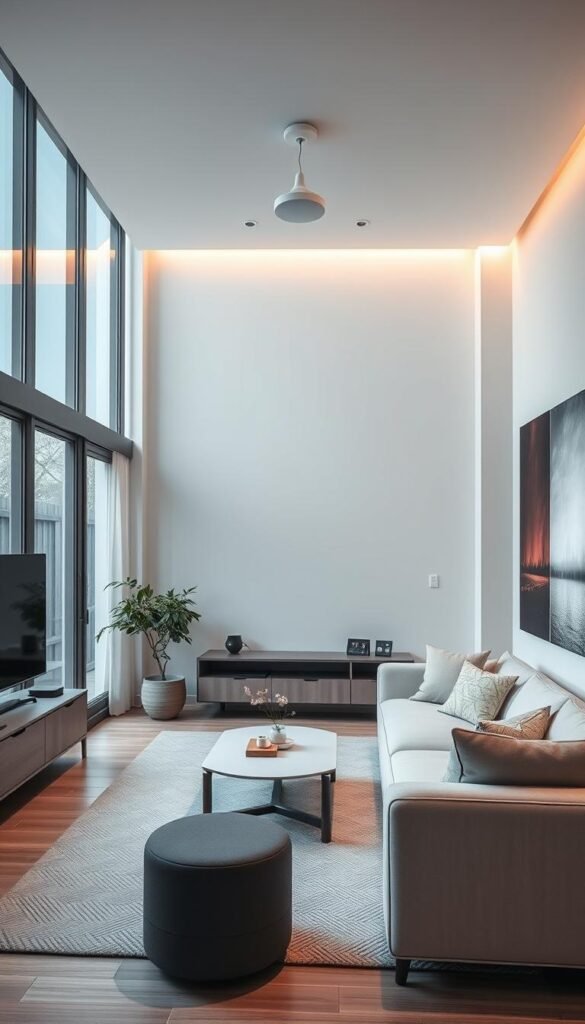
Conclusion: Embracing the full potential of your small living room
Decorating a small living room needs careful planning and creativity. But, the results can be truly stunning. By using the interior design tips from this article, homeowners can make the most of their small space. They can create a beautiful, functional, and inviting room that shows off their personal style.
We've looked at ways to make the most of a small space. This includes choosing smart furniture and planning layouts carefully. We've also talked about color schemes and lighting that can make the room feel bigger. By using these ideas, you can make your room feel larger than it is.
Textiles, plants, and technology are also key to a great design. Simple changes like adding area rugs and smart home features can make your room cozy and inviting. It can feel like a retreat.
By following these tips and ideas, you can transform your small space into a stylish and functional haven. It's a place you'll love to spend time in.
FAQ
What are some common mistakes to avoid when decorating a small living room?
Avoid over-accessorizing and using too many dark colors. Also, don't forget about furniture scale and proportion. Choose light colors, multi-functional furniture, and plan your layout carefully.
How can I make my small living room appear larger?
Use mirrors to create depth and select furniture with legs. Maximize natural light and use layered lighting for interest.
What type of furniture is best suited for a small living room?
Opt for multi-functional furniture like sofa beds and storage ottomans. These save space and are practical.
How can I incorporate plants into my small living room design?
Choose compact plants and use creative displays like hanging planters. This adds a natural touch without cluttering the space.
What are some effective storage solutions for small living rooms?
Use hidden storage, decorative storage, and vertical solutions like shelves. These keep your space tidy and stylish.
How can I create a sense of separation in an open-concept small living room?
Use rugs, lighting, and furniture to define areas. Room dividers, curtains, or shelving can also help create boundaries.
What color schemes work well in small living rooms?
Light and neutral colors make rooms appear larger. Add accent colors for contrast and interest. Choose colors that enhance your space's mood.
How can I maximize natural light in my small living room?
Keep windows clear and use sheer curtains. Avoid heavy drapery. Mirrors can also reflect light, making your space brighter.