We're diving into the latest interior design trends. These styles will make your living room stand out. The future of living spaces focuses on new and green designs.
Let's look at the top trends in interior design. You'll see everything from bright colors to green materials. We'll show you how to update your space with these trends.
Key Takeaways
- Discover the latest interior design trends for 2026
- Learn how to incorporate sustainable design into your space
- Explore bold color palettes and statement pieces
- Find out how to create a stylish and on-trend living area
- Get inspired by the future of living spaces
The Future of Living Spaces: What to Expect in 2026
As we enter 2026, our living spaces are set for a big change. How we live, work, and interact in our homes is evolving. This is thanks to new tech, a focus on sustainability, and the desire for spaces that feel just right for us.
"The future of design is not just about looks; it's about making spaces that meet our needs," a top design expert notes. This change is driven by design forecasting. It's a way to guess what's next by looking at today's trends and how society is moving.
How Design Forecasting Works
Design forecasting looks at today's trends, new tech, and how society is changing. It helps designers and homeowners keep up with the latest by spotting trends early.
- Trend analysis
- Technological impact assessment
- Societal shift evaluation
Why Early Adoption Matters
Adopting new design trends and tech early lets homeowners create stylish, functional, and green spaces. By jumping on these changes early, people can enjoy the latest in design before it's everywhere.
Early adopters get to enjoy the perks of new tech and design trends. These include better comfort, more sustainability, and higher property value.
"The early adopters of new design trends will be the ones to shape the future of living spaces."
Biophilic Design: Bringing Nature Indoors
Biophilic design is more than a trend; it's a movement. It aims to create living spaces that feel like nature. By adding natural elements to our living rooms, we make spaces that look good and feel good.
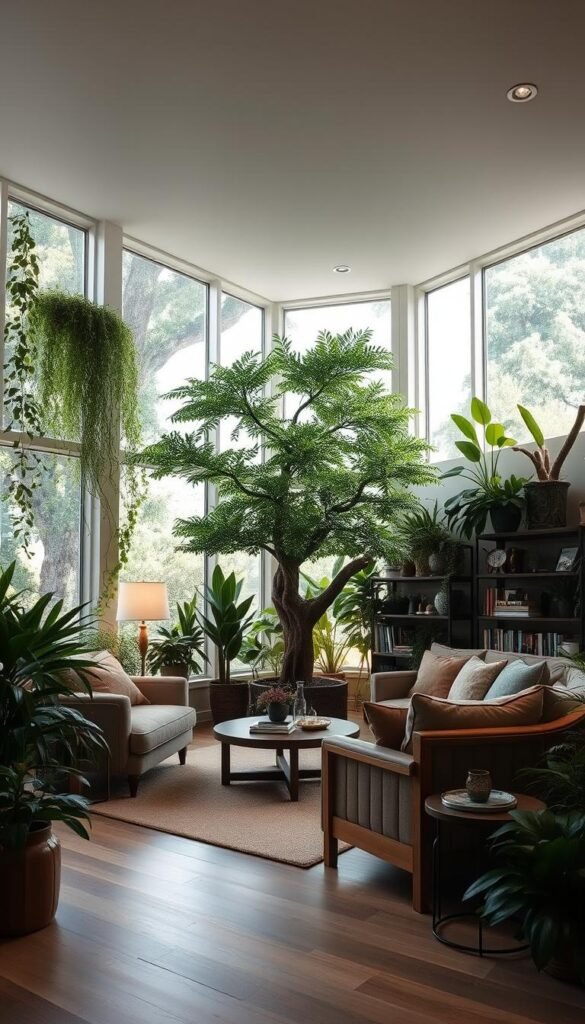
Living Walls and Vertical Gardens
Living walls and vertical gardens are key in biophilic design. They clean the air and add greenery to cities. For living walls, use a modular system for easy care and plant changes.
Natural Material Integration
Using natural materials like wood, stone, and bamboo makes your living room more biophilic. These materials add warmth and texture, making your space cozy and welcoming.
| Natural Material | Benefits | Design Ideas |
|---|---|---|
| Wood | Warmth, durability | Wooden flooring, wall paneling |
| Stone | Timeless elegance, robustness | Stone fireplace, feature walls |
| Bamboo | Sustainability, versatility | Bamboo furniture, blinds |
Organic Shapes and Forms
Organic shapes and forms are vital in biophilic design. They mirror nature's curves and patterns. Use furniture with rounded edges or pieces that look like nature to create a calming atmosphere.
By following biophilic design, you can turn your living room into a peaceful haven. It's a place that cares for your body and soul.
Smart Sustainability: Eco-Conscious Living Room Solutions
Making a living room sustainable is more than just looks. It's about choosing eco-friendly options that help our homes and the planet. Smart sustainability is key in designing living rooms today.
Energy-Efficient Smart Furniture
Energy-efficient smart furniture is a big part of smart sustainability. Look for smart sofas with built-in USB ports and coffee tables with integrated wireless charging. These designs save energy and make our living spaces more useful.
- Choose furniture with energy-saving features like LED lights
- Find smart furniture you can control with your phone
- Go for pieces made from sustainable materials
Recycled and Upcycled Decor Elements
Adding recycled and upcycled decor is another smart move. Think about repurposed glass bottles as vases or old pallets turned into coffee tables. It's a way to cut down on waste and add personality to our homes.
Zero-Waste Design Principles
Following zero-waste design is essential for a green living room. It means less waste, minimal packaging, and durable products. By doing this, we greatly lessen our environmental harm.
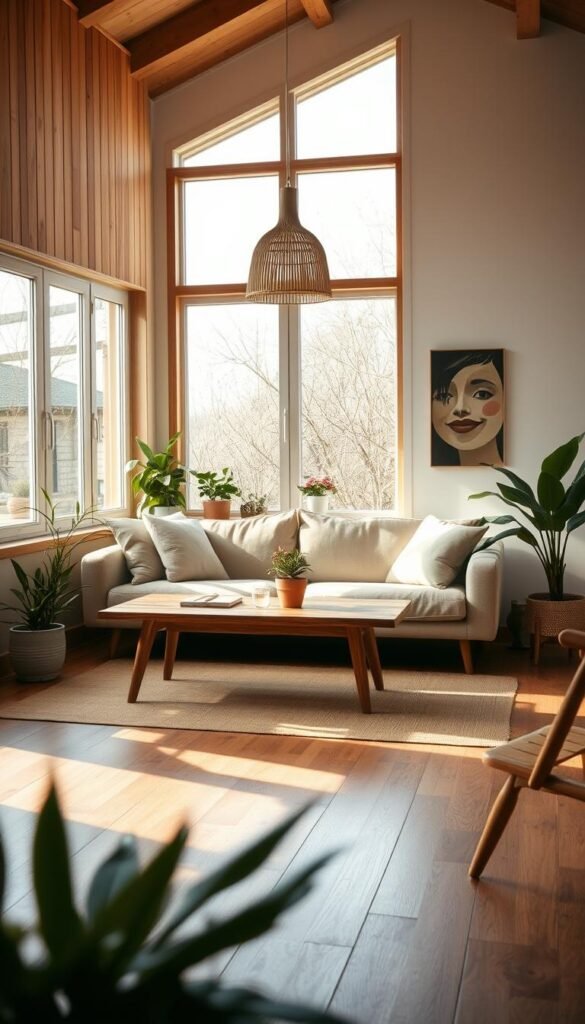
Multifunctional Spaces: Adaptable Living Room Designs
Modern living is complex, and we need spaces that can adapt. With remote work and lifestyle changes, our living rooms must be versatile and adaptable.
Transformable Furniture Systems
Transformable furniture is changing how we use our living rooms. Let's look at some cool solutions:
- Shape-Shifting Seating: Modular sofas that change shape for different needs.
- Hidden Storage Solutions: Furniture that hides storage, keeping the room tidy.
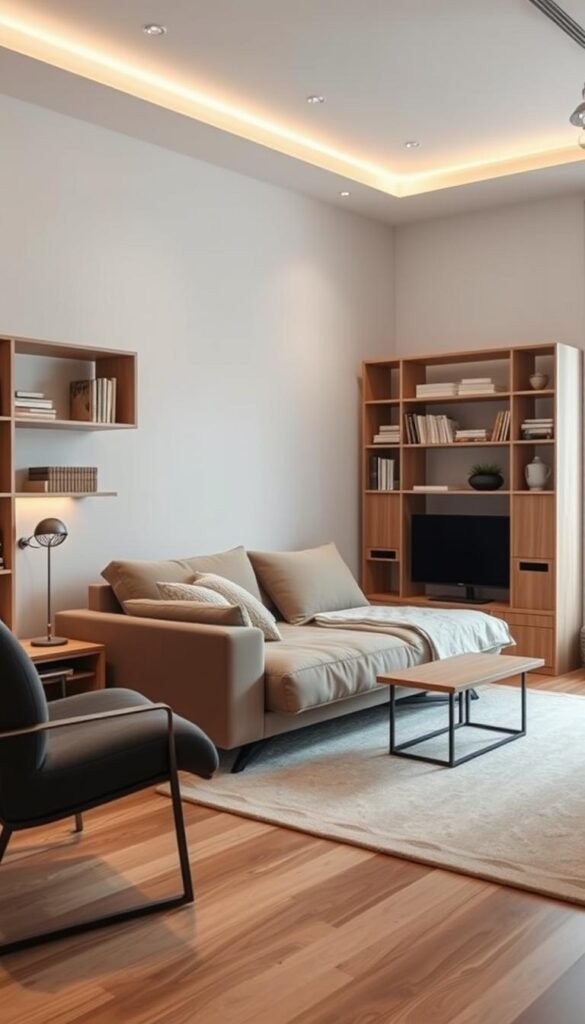
Modular Wall Units
Modular wall units are flexible and customizable. They let homeowners change their space as they want. These units can be entertainment centers or home offices.
"The beauty of modular design lies in its ability to evolve with your needs." - Design Expert
Work-Life Integration Solutions
More people work from home, so we need to blend work and living spaces. Here's how:
- Make work areas that stand out from the rest of the room.
- Use technology to boost productivity and cut distractions.
By adding these multifunctional features, we can make living rooms that are both beautiful and practical. They meet our changing needs.
Immersive Tech: AR and VR in Living Room Experiences
Imagine a living room where technology blends with your surroundings. This creates an immersive experience unlike any other. Immersive tech is changing how we use our living spaces.
Holographic Entertainment Systems
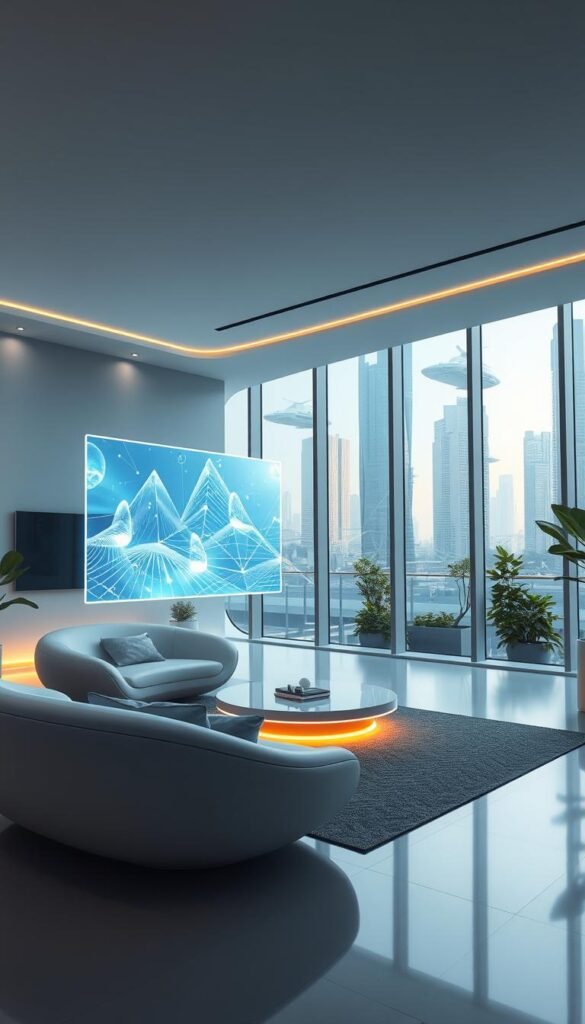
Holographic entertainment systems are changing our living rooms. They project holographic images for an interactive experience. Picture watching your favorite movie on a holographic screen or playing games that seem real.
Smart Surfaces and Interactive Walls
Smart surfaces and interactive walls are changing how we interact with our living rooms. They let us control lighting, temperature, and display digital art with a touch. It's about creating a space that looks good and works well.
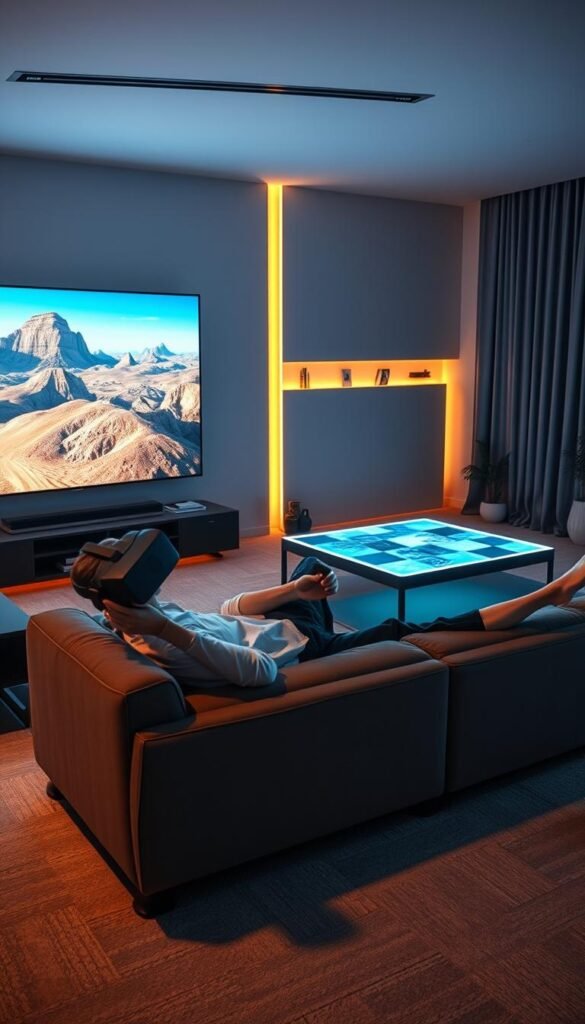
Invisible Tech Integration
Invisible tech integration makes technology part of our living room decor. It includes voice-activated controls and ambient computing features that improve our living experience.
Voice-Activated Environment Controls
With voice-activated controls, you can change your living room's ambiance with your voice. Whether it's dimming lights or changing music, it's easy to set the mood.
Ambient Computing Features
Ambient computing features work in the background to enhance our living room experiences. They include automated lighting and personalized entertainment recommendations. These features make our lives more convenient and fun.
2026 Living Room Decor Trends: Color Palettes and Materials
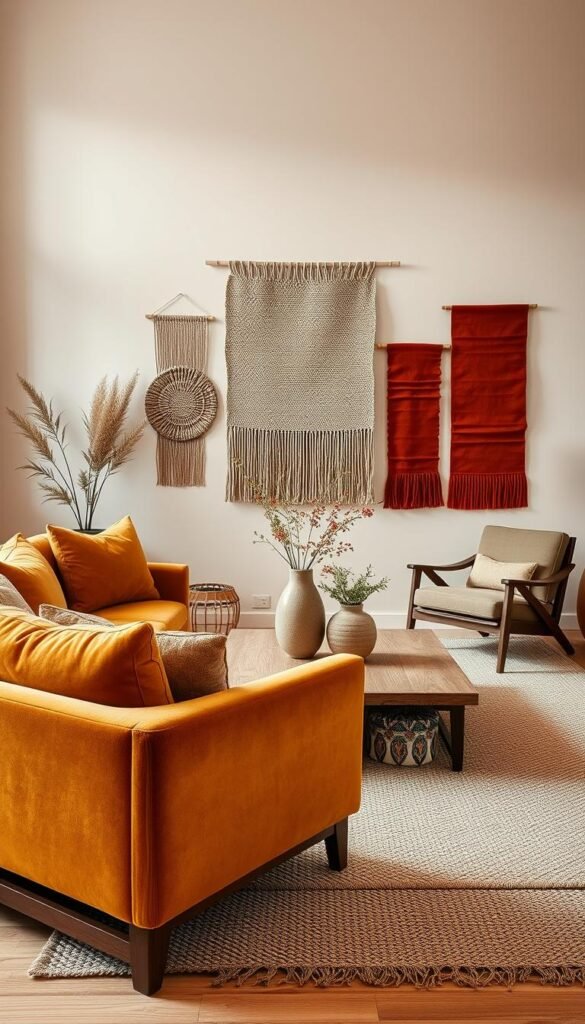
In 2026, living room decor is moving towards sustainability and regenerative design. We're seeing regenerative color schemes, innovative materials, and texture mixing. Let's dive into the latest trends and how to use them in your living room.
Regenerative Color Schemes
Regenerative color schemes are leading the way in 2026. These colors are inspired by nature, aiming for a balance between indoors and outdoors. Key colors include:
- Earthy tones like terracotta and sienna
- Soft greens and blues that remind us of foliage and water
- Neutral shades that bring calm and serenity
Innovative Sustainable Materials
Sustainability is a big deal in 2026 decor. We're seeing more use of sustainable materials that are good for the planet and add interesting textures to living rooms.
Bio-Fabricated Textiles
Bio-fabricated textiles use advanced tech to mix biology and fabric making. They're sustainable and offer unique textures, colors, and patterns.
Carbon-Negative Furnishings
Carbon-negative furnishings aim to remove more CO2 than they produce. They use sustainable materials and processes that care for the environment.
Texture Mixing and Layering
Texture mixing and layering are key for interesting and welcoming living rooms. In 2026, we're mixing natural textures like wood and stone with new materials like bio-fabricated textiles.
Personalized Spaces: AI-Driven Design Customization
Imagine walking into a living room that's just how you like it. Welcome to the world of AI-driven design. Our living rooms are getting more personalized thanks to AI. This change is making our homes more comfortable and uniquely ours.
Mood-Responsive Environments
AI-driven design lets us create mood-responsive environments. These spaces adjust to our feelings and needs. They use sensors and AI to change lighting, colors, and temperature for the perfect mood.
For example, a cozy evening can have soft lights and calming colors. A busy work session might need bright, energizing settings.
Personal Data-Informed Aesthetics
Our living rooms can now reflect our personal tastes thanks to AI. AI looks at our preferences and habits to suggest personalized decor. It might pick art, furniture, or colors we like.
Custom Digital Art Integration
AI-driven design also brings custom digital art into our homes. Digital art platforms let us display unique, AI-made art. This can be done in several ways:
- NFT Displays and Digital Galleries: Show off your digital art in a modern frame or screen.
- Projection Mapping Decor: Turn your walls into moving art with projection mapping technology.
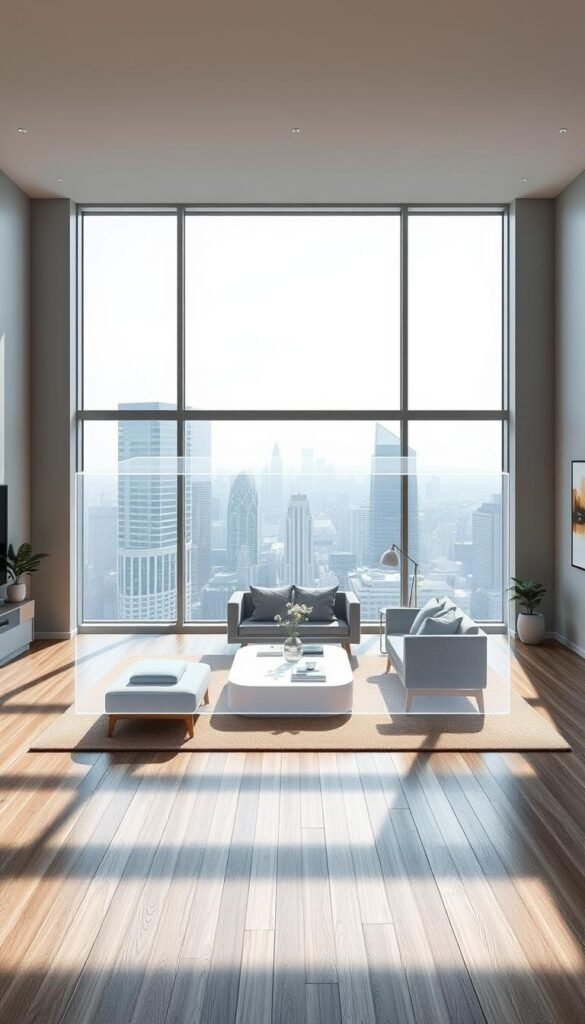
By using AI-driven design, we can make our living rooms beautiful and personal. As AI gets better, we'll see even more ways to make our homes comfortable and unique.
Global Fusion: Cultural Blend in Modern Living Rooms
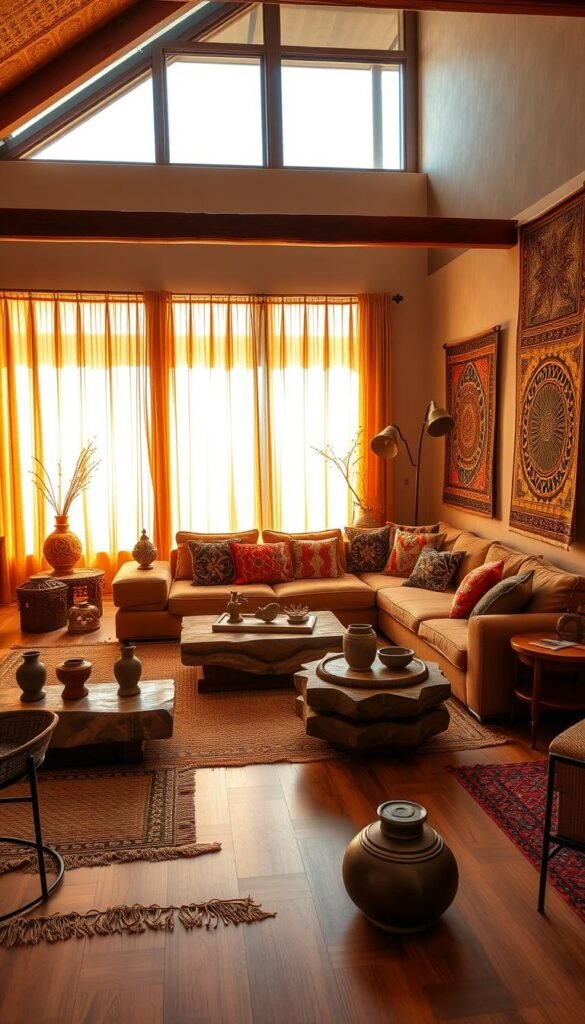
We're now living in a world where design knows no borders. Our living rooms are becoming vibrant, showing off our diverse backgrounds.
Heritage-Inspired Textiles and Patterns
Adding heritage-inspired textiles and patterns can really make your living room stand out. Think about using traditional African Kente cloth or Indian block-printed fabrics. These not only look great but also share stories of cultural richness.
Artisanal and Handcrafted Elements
Artisanal and handcrafted items add a special touch to your living room. Look for handwoven baskets, carved wooden decor, or handmade ceramics. They show off the skill of different cultures and support local artisans.
Cross-Cultural Design Influences
Design today is all about mixing different styles and elements. For example, mixing Scandinavian minimalism with Moroccan patterns creates a unique space. Here's a table showing some popular cross-cultural design influences:
| Cultural Influence | Design Element | Characteristics |
|---|---|---|
| Moroccan | Tile Work | Vibrant colors, geometric patterns |
| Scandinavian | Furniture | Minimalist, functional, light woods |
| Indian | Textiles | Intricate patterns, rich colors, silk fabrics |
Wellness-Centered Living: Spaces for Mental and Physical Health
Wellness-centered living is changing how we design our homes. It makes our living spaces better for our mental and physical health. As life gets busier, having a home that supports well-being is key.
Air Quality Optimization Features
Good air quality is vital for wellness. We can improve it with advanced air purifiers, air-purifying plants, and materials that don't release harmful chemicals. Better air quality makes our homes healthier.
Circadian Lighting Systems
Circadian lighting systems help us feel better. They change light levels and colors to match our natural day-night cycle. This improves sleep, energy, and overall well-being.
Meditation and Mindfulness Corners
Having special areas for meditation and mindfulness is important. These spaces should have calming colors, comfy seats, and soft textures. They help us relax and focus.
Sensory Design Elements
Sensory design adds to the wellness of our living rooms. It includes different textures, aromatherapy, and calming colors. These elements help us feel relaxed and calm.
Acoustic Optimization
Good sound quality is also key. It means designing spaces that reduce echo and outside noise. This makes our homes quieter and more peaceful. Sound-absorbing materials help achieve this.
| Wellness Feature | Benefits | Design Elements |
|---|---|---|
| Air Quality Optimization | Improved health, reduced allergy symptoms | Air purification systems, air-purifying plants, low-VOC materials |
| Circadian Lighting | Enhanced sleep, increased energy | Smart lighting systems, layered lighting |
| Meditation Corners | Reduced stress, improved mindfulness | Calming colors, comfortable seating, soothing textures |
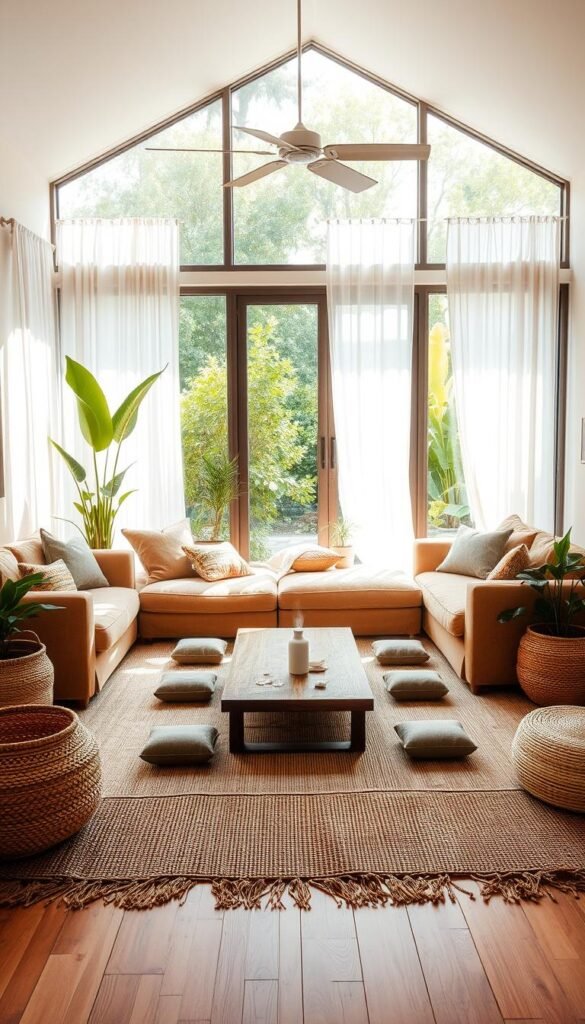
By adding these wellness-focused design elements, we can make our living rooms beautiful and healthy. They support our health and well-being.
Conclusion: Embracing the Future of Living Room Design
The future of living room design is all about change and beauty. We can make our living rooms both stunning and useful. This is done by adding elements like biophilic design, smart sustainability, and immersive tech.
Let's make these trends a part of our living rooms. We can have spaces that change with our needs and styles. This way, our living rooms will be truly special and match our unique tastes.
Looking ahead, it's thrilling to see how these trends will grow. With a focus on being green, using tech, and making things personal, we're set to create amazing living rooms. These spaces will be beautiful, useful, and ahead of their time.
FAQ
What are the key living room decor trends for 2026?
Trends for 2026 include biophilic design and smart sustainability. We also see multifunctional spaces, immersive tech, and personalized spaces. These trends are shaping the future of living room design.
How can I incorporate biophilic design into my living room?
To add biophilic design, use living walls and natural materials. Organic shapes help create a calm atmosphere in your living room.
What is smart sustainability in living room design?
Smart sustainability means using energy-efficient furniture and decor made from recycled materials. It also includes zero-waste design for a sustainable living room.
How can I make my living room more multifunctional?
Make your living room multifunctional with transformable furniture and modular units. These solutions help meet your changing needs.
What role does immersive tech play in living room design?
Immersive tech changes how we enjoy our living rooms. It includes holographic systems, smart surfaces, and invisible tech for a futuristic space.
How can I personalize my living room with AI-driven design?
Personalize your living room with AI by using mood-responsive environments and custom digital art. It's about creating a space that reflects your style.
What is global fusion in living room design?
Global fusion brings heritage textiles and artisanal pieces into your living room. It's about mixing cultures for a unique atmosphere.
How can I create a wellness-centered living room?
Create a wellness room with air quality systems and circadian lighting. Add meditation corners for mental and physical health.
What are some tips for incorporating regenerative color schemes into my living room?
Use colors that promote harmony in your living room. Natural materials and textures help. Balance bold colors with neutral tones.
How can I stay ahead of the curve in living room design trends?
Stay updated on design trends and technologies. This way, you can create a stylish and functional living room.